
Quick answer: When a child will not follow a morning routine, first find the exact step where the sequence breaks. Reduce the plan to three to five visible actions, put each cue where it is used, and keep adult tasks off the child’s list. Practice on a low-pressure morning before adding rewards or more reminders.
At 7:32, a child is wearing one sock and building beside the breakfast bowl. The backpack is packed, but it belongs to the adult who packed it. “We do this every day” may be true, yet the child still has to notice the cue, stop the current activity, remember the next step, and find the needed object.
The useful question is not “Why won’t my child listen?” It is “Where does this morning become hard to start or continue?”
Find the broken handoff
Watch one morning without changing the system. Write down the first point that requires a second reminder. Use the categories below to locate the handoff.
- Starting: the child does not begin after the first cue.
- Sequencing: one task is completed, but the next is forgotten.
- Materials: clothes, shoes, forms, or breakfast items are not ready.
- Transitioning: stopping play or leaving the table causes the delay.
- Timing: the routine contains more work than the available minutes.
Each problem needs a different change. A timer does not find missing shoes, and a reward does not make a seven-step instruction easier to remember.
Build a morning checklist the child can use
Choose the minimum exit sequence
Start with the actions required to leave safely and prepared. A preschool list might show bathroom, clothes, breakfast, teeth, and shoes. An older child may need bag, water bottle, and one school-specific item. Optional room cleanup belongs elsewhere.
Put steps in the order they already happen
A chart should follow the home, not an ideal routine copied from another family. If the bathroom is upstairs and breakfast is downstairs, avoid sending the child back and forth. Group actions by location.
Use visible verbs
Write “shirt and pants on,” “bowl in sink,” or “folder in bag.” Phrases such as “get ready” and “be responsible” describe outcomes without showing the first movement.
Give the routine a finish
The last card might be “shoes on,” “wait by the door,” or “choose a car book.” A known finish prevents the child from discovering three extra jobs after completing the page.
A seven-day reset for difficult mornings
Day 1: observe
Record the first stalled step, the time it occurs, and what the child is doing immediately before it. Do not diagnose motive.
Day 2: prepare the environment
Place clothes together, choose one location for shoes, and give papers and backpacks a landing spot. Preparation owned by the adult should stay on an adult evening list.
Day 3: make three to five cards
Handwritten words, quick drawings, or photos are enough. Place the first card beside the first action rather than on a decorative command center far away.
Day 4: practice when nobody is late
Walk through the sequence after dinner or on a weekend morning. Ask the child to show where each action happens and how a finished card moves.
Days 5–7: point before repeating
Use one brief direction, pause, then point to the card. At the end of each morning, note the step that needed adult help. Change only that step after the test period.
Three examples by age and independence
A preschooler who can use pictures
- Toilet.
- Clothes.
- Breakfast.
- Adult helps brush teeth.
- Shoes.
The child turns over each picture. The adult keeps lunch packing and departure-time monitoring on a separate list.
An early elementary child who gets distracted
- Dress before opening toys.
- Eat at the table.
- Bathroom and teeth.
- Water bottle and folder in bag.
- Shoes; choose the waiting activity.
If breakfast conversation stretches, a kitchen clock can show the transition time. The clock is information, not a threat.
A child who needs fewer steps at once
Show only Now: clothes and Next: bathroom. Replace the cards after those actions finish. The broader ADHD-friendly routine guide explains how to use shorter blocks without assuming that every distracted child has ADHD.
What to say instead of repeating the whole morning
The CDC’s guidance on giving effective directions recommends getting a child’s attention, stating one specific direction, and following through. Adapt that idea to the child’s age:
- “Look at the first card: clothes.”
- “Your bowl is in the sink. What does the kitchen card show next?”
- “Shoes are the finish. Do you want the blue pair or the black pair?”
A limited choice can decide how to complete a required step. It should not reopen whether the family is leaving.
Why common fixes fail
A full-page chart becomes wallpaper. Cover later rows or replace it with a short strip at the current location.
The child waits for every prompt. Pause before supplying the next step and point to the system. Independence grows only when the child has a chance to retrieve the cue.
A reward starts a new negotiation. Make the task and finish clear first. If a reward is used, define it before the routine begins and do not increase it mid-morning.
The routine changes by adult mood. Keep the exit essentials stable. Put unusual items—library book, sports gear, permission slip—on a separate “today” card.
Everyone is simply out of time. Move preparation to the evening or adjust wake-up and departure expectations. No visual tool creates extra minutes.
When the morning problem is larger than the chart
Sleep difficulties, anxiety, learning needs, sensory discomfort, family stress, and attention problems can all affect mornings. A checklist cannot determine the cause. If distress is intense, safety is affected, or the same difficulty appears across home and school, share concrete observations with the child’s teacher, pediatrician, or another qualified professional.
If belongings and paperwork are the main problem, use a family command center for the adult logistics instead of crowding the child’s morning page. If afternoons create the same pileup, the after-school routine guide uses a separate arrival sequence.
Use a printable only after the sequence is clear
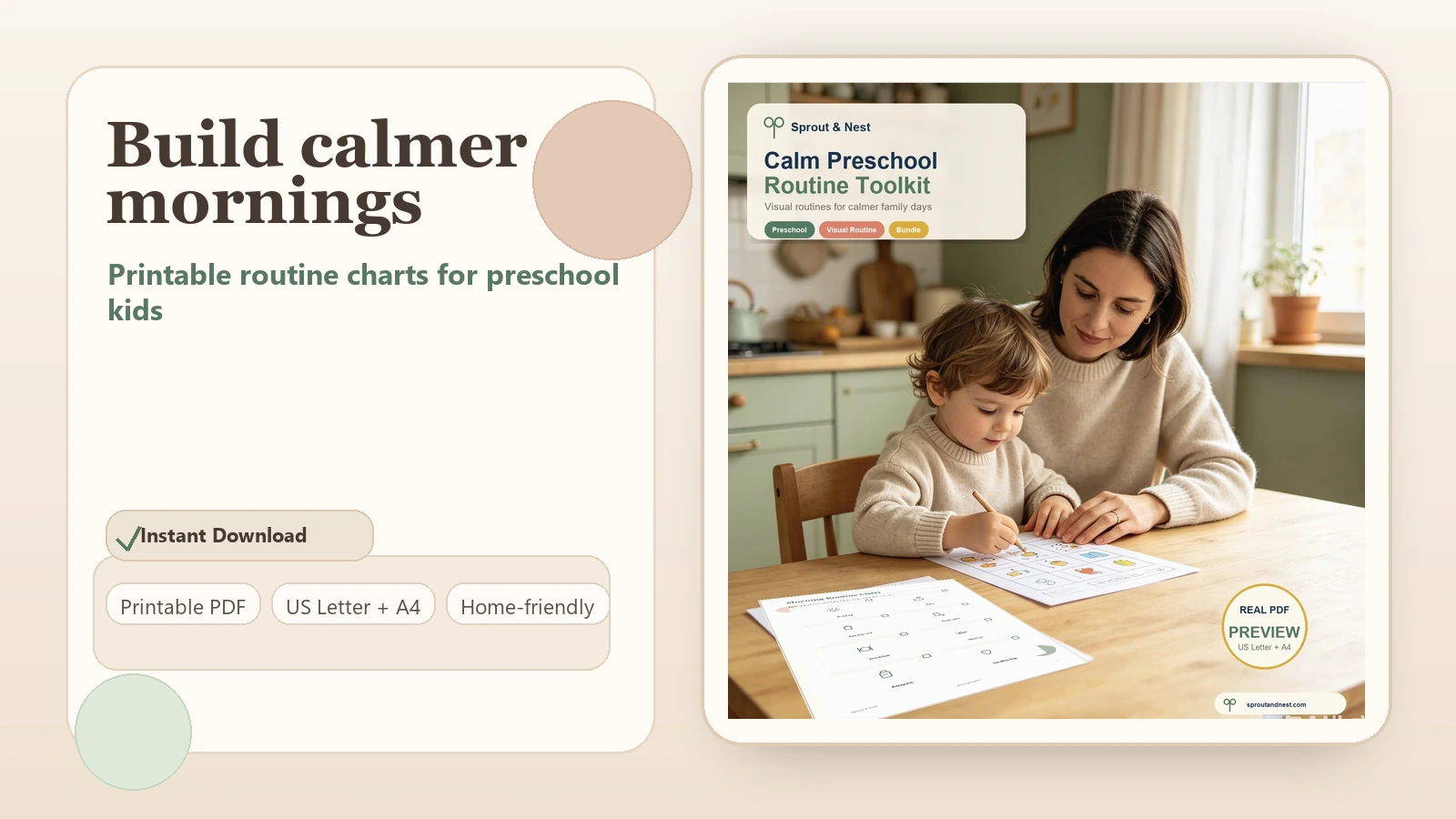
Once a handwritten version survives several real mornings, the ADHD-Friendly Morning Checklist can provide a reusable layout. The Calm Preschool Routine Toolkit offers picture-based options for younger children. Pick the smallest format that fits the tested routine.
Frequently asked questions
How many steps should a child’s morning chart have?
Begin with three to five main actions. Add a step only when the existing sequence is readable and the child needs the added information.
Should getting dressed happen before breakfast?
Use the order that matches your space and the child’s pattern. Dressing first may protect time; breakfast first may work better for a hungry child. Keep the chosen order stable long enough to evaluate it.
What if my child knows the routine but still refuses?
Acknowledge the feeling, keep the boundary short, and check whether the task is clear and achievable. A visual list supports memory; it does not remove every disagreement.
Do we need a timer?
Only if the child can use it as helpful information. Some children benefit from seeing time pass; others become more distressed. Test it on one transition rather than timing the whole morning.


One Comment