
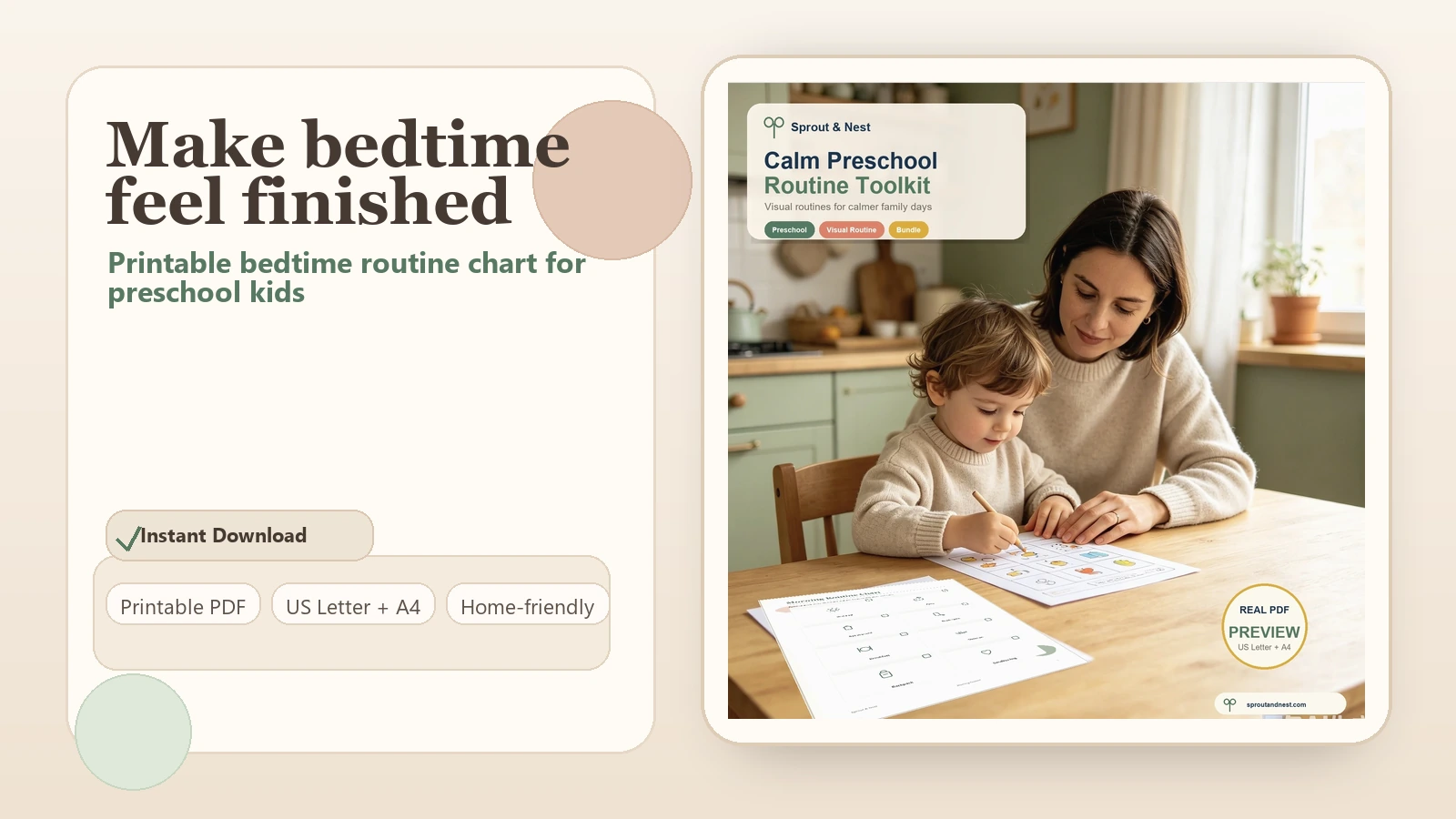
Quick answer: A preschool bedtime routine chart should show a short, predictable ending to the day. A practical sequence is toilet, pajamas, adult-assisted toothbrushing, one book, hug, and lights out. Work backward from the family’s target bedtime, keep screens outside the wind-down, and decide in advance how requests for water, another book, or another hug will be handled.
Bedtime often stretches through reasonable requests delivered one at a time. The cup of water appears after the story. A missing stuffed animal becomes urgent after lights out. The chart helps when it answers, before everyone is tired, what belongs in the routine and where the routine ends.
It is a visual agreement, not a sleep treatment.
Build the routine backward from lights out
Choose the intended lights-out time, then estimate the steps the family can repeat most nights. If the sequence usually takes thirty minutes, begin it thirty minutes before lights out rather than demanding that the same work fit into ten.
The American Academy of Pediatrics’ healthy sleep guidance recommends consistent daily routines and keeping screens out of children’s bedrooms, especially at night. It also suggests turning screens off at least an hour before bedtime to reduce sleep disruption.
Use that screen-off point as a separate household cue. Do not put “turn off tablet” in the middle of the bedtime chart if that conflict consumes the whole wind-down. The screen-time transition plan can manage that earlier handoff.
A six-step preschool bedtime chart
- Toilet: include the last planned bathroom visit.
- Pajamas: offer two acceptable choices before the routine begins.
- Brush teeth: show the child’s role while keeping effective brushing adult-assisted.
- Choose one book: define the number before reading starts.
- Hug and comfort item: gather the item before lights out.
- Lights out: use one closing phrase and end the checklist.
The AAP’s Brush, Book, Bed program uses a simple predictable ritual and notes that young children need adult help to brush effectively. A family may add a bath or medication administered according to professional instructions, but the chart should not turn every possible task into a required nightly row.
Keep adult jobs off the child’s page
A preschooler can move the pajama card and carry a book. The adult remains responsible for time, safe bathing, medication, effective toothbrushing, room safety, and responding to illness. When those responsibilities appear as child failures on a reward chart, the chart measures the wrong person.
Use a small adult reset list elsewhere if needed:
- fill the water cup;
- check the room temperature and night-light;
- place tomorrow’s clothes;
- return screens to the family charging location;
- note any health instructions that must be followed.
Introduce the chart before bedtime
Show the cards in the afternoon, when the child can examine them without the pressure to sleep.
- Ask the child to place the known steps in order.
- Walk to each location and decide where the card will live.
- Practice moving or checking one completed card.
- Point to the final card and explain the closing phrase.
- Run the routine that evening without adding a reward.
If the child cannot scan six pictures, begin with three larger stages: bathroom → book → bed. The details can remain in the adult’s spoken support.
Plan for the predictable delay requests
“I need water”
Put one small drink before the book or place a cup where the family normally allows it. Respond to genuine needs, but do not restart the entire routine each time the request appears.
“One more book”
Choose the number before opening the first book. A child can select which book; the choice does not change how many. On rushed nights, keep the reading connection while choosing a shorter book rather than dropping it without warning.
“I forgot to tell you something”
Add a two-minute “talk about tomorrow” moment before the final hug. For older preschoolers, a small note card can hold a question until morning.
“Check on me again”
If check-ins help your child, make them concrete: “I will return after I put the dishes in the sink.” Keep the promise. Do not offer repeated check-ins you cannot sustain.
“I’m scared”
Acknowledge the fear and check the environment. Use a familiar comfort plan rather than debating whether the feeling is logical. Persistent anxiety, nightmares, or fear that interferes with daily life deserves discussion with a pediatrician or qualified mental-health professional.
Two worked bedtime examples
A child who gets more active as bedtime approaches
At 7:15, screens are already away. The child chooses pajamas, uses the toilet, and brushes with adult help. A short picture book happens in the same chair. The child then carries the book to its basket, chooses one stuffed animal, and turns over the lights-out card at 7:45.
The family keeps chasing games and rough movement earlier in the evening. The chart does not say “calm down”; it shows actions that gradually reduce choices and locations.
A child who asks for repeated reassurance
The chart includes toilet, pajamas, teeth, book, “tomorrow talk,” hug, and bed. The adult writes one morning plan on a small card: “Grandma picks you up after school.” The same closing phrase follows: “Your questions are saved. I will check once after the kitchen is clean.”
The check-in is part of the agreed routine, not added after twenty minutes of calling out.
What to adjust when bedtime still stalls
The chart creates more conversation. Replace decorative icons and long labels with a few familiar photos or verbs. Point instead of explaining every row.
The routine starts after the child is exhausted. Test starting fifteen minutes earlier for several nights. The AAP’s bedtime trouble guidance recommends a quiet routine that helps children know sleep is approaching.
Naps or schedules vary. Keep the sequence recognizable even when the clock shifts. If sleep timing remains difficult, discuss the full daily sleep pattern with the child’s clinician.
The child repeatedly leaves the room. Return them with minimal conversation and reuse the closing cue. Check whether a bathroom, hunger, pain, fear, or environmental problem has been missed.
Different caregivers use different endings. Agree on the final book count, comfort item, check-in, and closing phrase. The routine can tolerate different voices; it struggles with a new finish every night.
The child cannot settle after a busy evening. Shorten optional activities and protect the transition into bedtime. A denser visual chart cannot compensate for arriving home at the intended sleep time.
Bedtime routine versus sleep problem
A chart organizes behavior around bedtime; it cannot evaluate snoring, breathing pauses, pain, restless sleep, persistent insomnia, medication effects, or daytime sleepiness. Bring those concerns to a pediatrician. Seek prompt medical care for breathing or other urgent symptoms.
This page is written for preschoolers, roughly ages three to five, not infants. Infant sleep requires separate safe-sleep guidance. A child with broader difficulty following daily sequences may benefit from the ADHD-friendly routine framework without assuming that bedtime behavior confirms a diagnosis.
Choose the smallest printable that fits
Test the order with handwritten cards for several evenings. If the sequence is right, the Screen-Free Bedtime Routine Chart offers a reusable format. The night-routine visual signs provide a simpler picture-based option. Use one chart, placed where the first bedtime action begins.
Frequently asked questions
How long should a preschool bedtime routine take?
There is no universal length. It should be long enough to complete necessary care and connection without becoming an open-ended event. Work backward from lights out using the time your family actually needs.
Should bath be on the chart every night?
Only if it is truly part of the nightly sequence. If bath happens on selected nights, use a removable card so the rest of the routine stays stable.
Can a bedtime chart stop stalling?
It can make the order and ending easier to understand. It will not remove every request, fear, boundary test, or sleep difficulty. Adult follow-through and attention to underlying needs still matter.
Should the child earn a reward for staying in bed?
Clarify the routine and address health or environmental issues first. If a family uses a reward, choose a behavior the child can control and avoid making sleep itself the task they must perform.


One Comment