Last updated: June 2026. Always supervise sensory play, choose age-appropriate materials, and avoid choking hazards for young children.
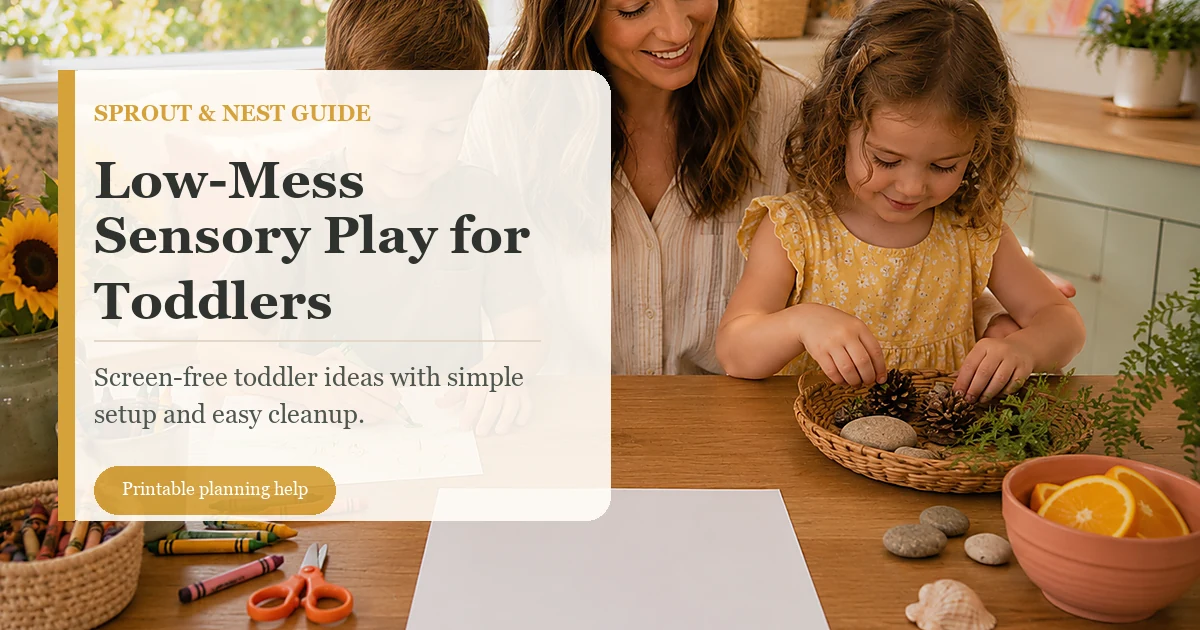
Low-mess sensory play for toddlers is for the parent who wants screen-free activity time without turning the kitchen into a glitter-covered science lab. Sensory play can be simple, contained, and realistic for a normal weekday.
Quick answer: what counts as low-mess sensory play?
Low-mess sensory play uses contained materials, short setup times, clear boundaries, and easy cleanup. Think sticker sorting, water painting, scooping pom-poms, texture matching, play dough mats, nature trays, or a small bin on a towel instead of a full-room activity.
Key takeaways
- Low-mess sensory play should have a visible boundary: tray, towel, bin, mat, or table space.
- Choose activities by cleanup time, not by how impressive they look online.
- Use fewer materials. Toddlers often play longer when the choices are simple.
- Sensory play can support language, motor skills, social interaction, and experimentation, but it should still fit your real home.
- Keep a short printable menu so you are not inventing activities while already tired.
Why sensory play feels harder than it should
Online sensory bins often look beautiful, but they can quietly require shopping, prep, cleanup, storage, and constant monitoring. That is too much for a parent who just needs twenty calm minutes before dinner.
A low-mess plan starts with one question: How much cleanup can I handle today?
Low-mess sensory play ideas by cleanup level
Almost no cleanup
- Sticker sorting on paper.
- Texture walk with socks, towel, rug, and blanket.
- Color hunt around the room.
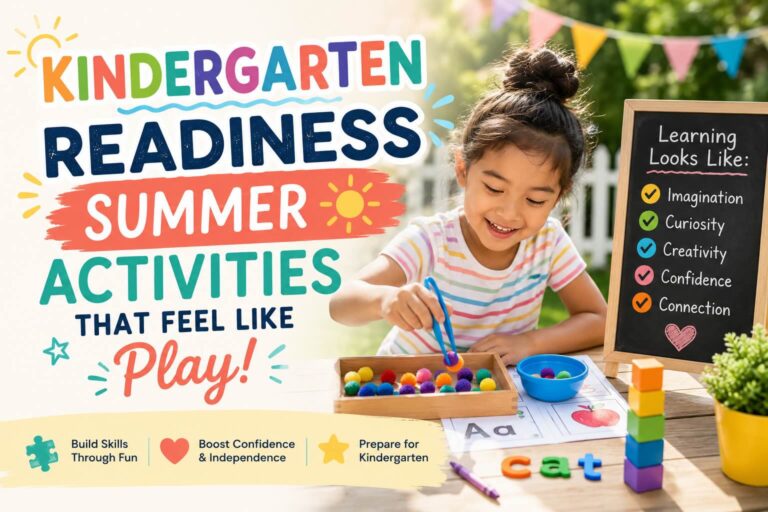
- Pom-pom transfer with tongs on a tray.
- Water painting on construction paper or cardboard.
Five-minute cleanup
- Rice or oats in a small lidded container with a scoop.
- Play dough with one roller and one cookie cutter.
- Nature tray with leaves, pinecones, smooth stones, and magnifying glass.
- Bubble foam in the sink with measuring cups.
- Matching soft, rough, smooth, and bumpy household items.
Outside or bath cleanup
- Paint with water on the sidewalk.
- Ice cube rescue in a plastic tub.
- Wash toy animals with a toothbrush.
- Sponge squeeze station.
- Mud kitchen with strict outdoor boundaries.
How to make sensory play easier to repeat
- Choose one container that defines the play area.
- Use only two or three materials at a time.
- Set a simple rule: materials stay on the tray, mat, or towel.
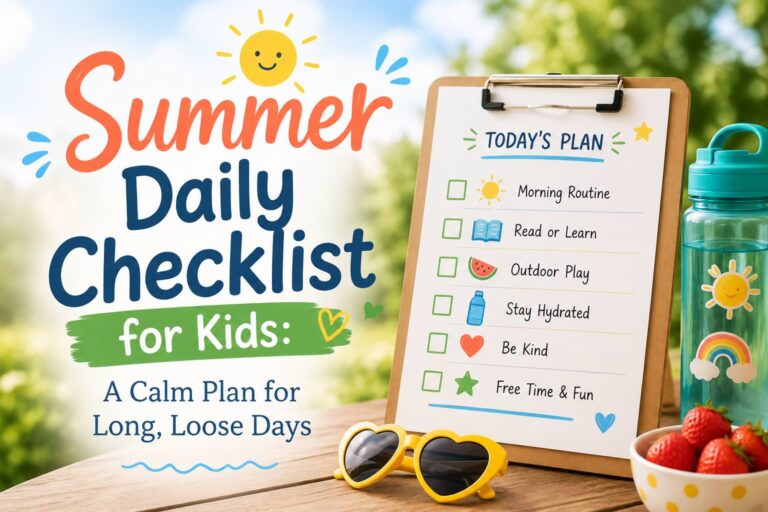
- Keep a short weekly menu of activity choices.
- Rotate the same materials in new combinations instead of buying more.
Plan sensory play without the huge cleanup
The Preschool Sensory Bin Planner helps you plan simple sensory activities by theme, materials, setup time, and cleanup level so screen-free play feels doable.
What to avoid with toddlers
Avoid small loose items that may be choking hazards, materials your child is likely to mouth unsafely, and activities that require more supervision than you can realistically give. If your child has sensory sensitivities or developmental concerns, ask your pediatrician or occupational therapist for guidance.
Use a printable menu instead of searching every day
A printable activity menu keeps your options visible. On hard days, you can pick from “no cleanup,” “five-minute cleanup,” or “outside cleanup” instead of scrolling for ideas while your child is already restless.
Want a month of simple screen-free ideas?
The Sensory Play Calendar Printable gives you an easy way to rotate sensory activities without planning from scratch every morning.
Frequently asked questions
What is the easiest low-mess sensory activity for toddlers?
Water painting is one of the easiest. Give your child a brush, cup of water, and cardboard or construction paper. The cleanup is usually just drying the table.
Is sensory play necessary every day?
No. Sensory play is helpful, but it does not need to be elaborate or daily. A few simple activities each week can still support exploration and independent play.
How do I stop sensory play from becoming a mess?
Use a tray, towel, bin, or mat as a visible boundary. Start with fewer materials and teach the rule before adding more interesting textures.
Related Sprout & Nest guides
- 30 Low-Prep Sensory Play Ideas for Preschoolers
- Screen-Free Summer Routine for Kids
- Summer Sensory Bin Ideas for Toddlers