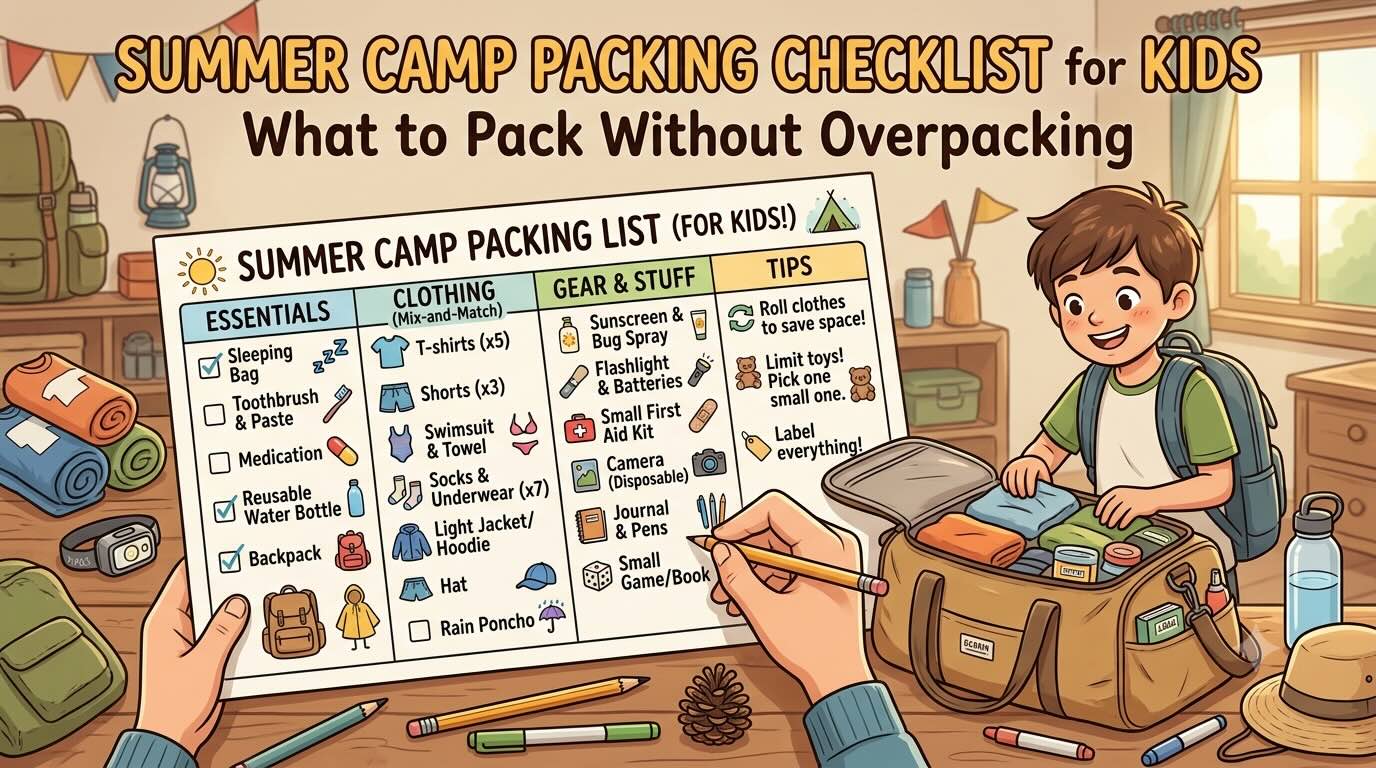
Quick answer: A summer camp packing checklist for kids works best when it is short, visual, and organized by daily use: wear, eat, play, swim, comfort, and bring home. The goal is not to pack more. The goal is to make mornings easier and help kids recognize what belongs to them.
Summer camp mornings can feel strangely intense. One missing swimsuit, one forgotten water bottle, one mystery sunscreen, and the day starts with everyone searching under beds instead of leaving calmly. If your child is young, anxious, easily distracted, or still learning independence, a verbal reminder is usually not enough.
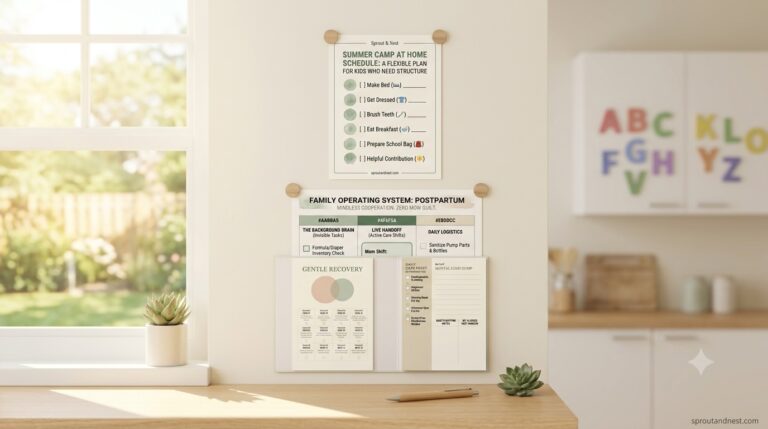
This guide gives you a practical packing rhythm you can use with preschool and early elementary kids, plus printable-friendly ideas that pair naturally with Sprout & Nest summer planners.
Key takeaways
- Use one visible checklist instead of repeating instructions every morning.
- Pack by routine category, not by random item category.
- Use picture labels or simple words for kids who cannot read confidently yet.
- Keep a small reset basket by the door for sunscreen, hats, water bottles, and camp forms.
- Choose fewer backup items so your child can actually manage the bag.
What should be on a summer camp packing checklist for kids?
A strong camp checklist should include clothing, shoes, weather protection, food or snack items, hydration, comfort items, paperwork, and a bring-home check. For younger children, each category should be visible and concrete so they can help instead of waiting for an adult to remember everything.
Daily essentials
- Water bottle
- Lunch box or snack bag
- Hat or sunglasses
- Sunscreen, if the camp allows it in the bag
- Comfort item, if your child needs one for transitions
- Change of clothes in a labeled pouch
- Wet bag or plastic bag for damp items
Activity-specific items
- Swimsuit and towel for water days
- Closed-toe shoes for playground or nature days
- Library book or reading log for quiet camp days
- Art shirt for messy activity days
- Signed forms, medication notes, or pickup cards
Why do families overpack for camp?
Parents overpack because summer camp feels unpredictable. Heat, water play, extra forms, forgotten lunches, and changing schedules all create mental load. A checklist reduces that anxiety because you are no longer planning from memory every morning.
The hidden problem is that an overpacked bag can make your child less independent. If there are five pouches, three spare outfits, and no clear system, the child may not know what to use or what to bring home. A better system is simple, repeated, and visible.
How to make camp packing easier for young kids
Use the same setup every day. Put the checklist near the bag, let your child check off one item at a time, and keep the bag layout consistent. Kids build confidence when the physical system stays predictable.
- Choose one bag zone. Keep the backpack, shoes, hat, and water bottle in one launch area.
- Use picture labels. Add simple icons for water, lunch, hat, towel, shoes, and sunscreen.
- Pack the night before. Leave only cold food and water for the morning.
- Add a bring-home row. Teach your child to look for lunch box, bottle, towel, and wet bag before leaving camp.
- Review the next day. If something came home wet, missing, or unused, adjust the list.
What printable system works best for summer camp?
For camp weeks, the best printable system is a one-page checklist plus a weekly overview. The checklist handles daily items. The weekly overview shows which days need swim gear, library books, sports shoes, or extra snacks.
If your family already uses a command center, place the camp checklist beside the weekly calendar. The Family Command Center Printable Bundle is a good fit when you need camp schedules, meals, errands, and home routines visible in one place. For younger kids, the Screen-Free Summer Survival Kit helps connect camp days with calmer after-camp activities.
Printable camp packing checklist example
| Category | What to Check | Kid-Friendly Cue |
|---|---|---|
| Wear | Clothes, socks, shoes, hat | Ready body |
| Eat | Lunch, snack, water bottle | Food and water |
| Play | Swim gear, towel, art shirt | Today?s activity |
| Care | Sunscreen, medication note, comfort item | Body helpers |
| Bring home | Bottle, lunch box, wet bag, artwork | Back in the bag |
How do you prevent camp morning meltdowns?
Prevent camp morning meltdowns by removing as many decisions as possible before morning. Pick clothes the night before, keep the checklist in the same place, and let your child participate in two or three concrete steps instead of hearing a long list of reminders.
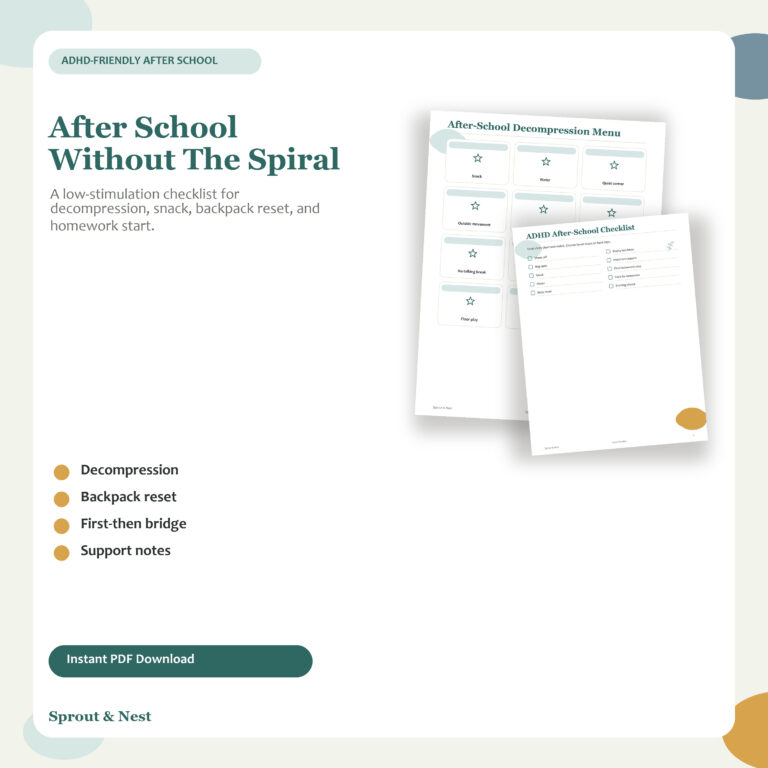
For children who struggle with transitions, add a small visual rhythm: breakfast, backpack check, shoes, goodbye. If your child has ADHD or needs stronger visual support, the ADHD Summer Break Expansion Pack can help make the morning sequence more predictable.
FAQ
What age is a summer camp packing checklist best for?
It works well for preschool through early elementary children. Younger kids may need picture cues, while older kids can use checkboxes and written labels.
Should kids pack their own camp bag?
Kids can help pack part of the bag, but parents should still check essentials like medication, forms, food safety, and weather-specific items.
How many extra clothes should I pack for camp?
For most young kids, one full change of clothes is enough unless the camp specifically requests more. Too many extras can make the bag harder to manage.
Next step
If summer mornings feel scattered, start with one visible checklist this week. Browse the Summer Printables collection or use the Screen-Free Summer Survival Kit to build a calmer summer rhythm around camp days.