Last updated: June 2026
For working moms, summer can feel like a second job stacked on top of the first. Camps change weekly, childcare coverage shifts, snacks disappear, and everyone still expects you to know where the swimsuit is.
If you are searching for a working mom summer schedule for kids, you probably do not need a perfect summer schedule. You need a repeatable system that your child can understand and that you can actually keep using on tired days.
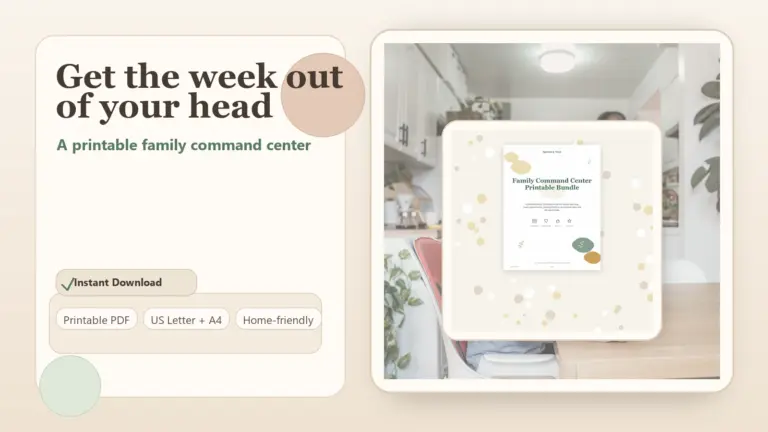
Quick answer: A working mom summer schedule needs a family command center, weekly care map, packing checklist, snack plan, and a daily rhythm that caregivers can follow without texting you every hour.
Why this summer problem feels so hard
Working parents are coordinating care, transportation, camps, meals, supplies, and backup plans across multiple adults. The schedule has to support handoffs, not simply list children's activities.
The simplest way to build a weekly summer command center
Map who is responsible for each transition: morning departure, pickup, dinner, and evening reset. Add addresses, contacts, and packing notes beside the relevant day.
- Map care coverage before planning activities.
- Write camp or sitter details in one visible place.
- Create repeatable packing lists for pool, camp, library, and errands.
- Use a Sunday reset to prep snacks, clothes, and papers.
- Build one backup plan for sick days or canceled care.
What a working-parent summer schedule needs
Start with coverage and fixed commitments, then layer in preparation tasks. One shared view reduces the need to reconstruct the week from messages and memory.
- Care coverage and contact details
- Drop-off and pickup ownership
- Camp or outing locations
- Daily packing requirements
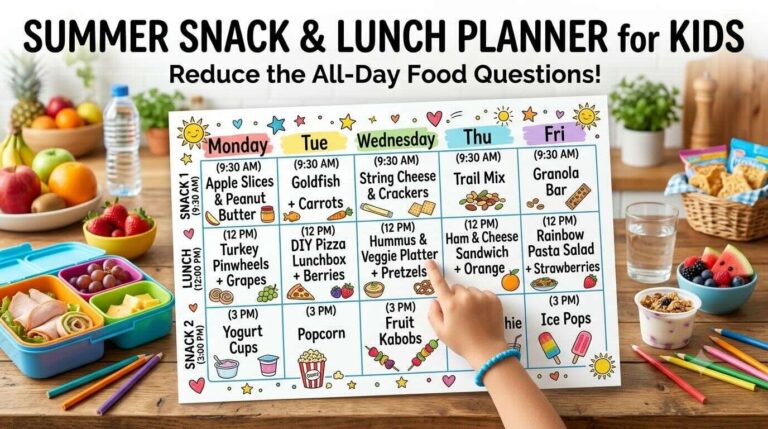
- Meal and snack notes
- A cancellation or sick-day backup
Try it in one real situation
Build next week during one short Sunday review. Confirm coverage first, then prepare only the items that recur. Give caregivers a single handoff note for meals, medication instructions supplied by the parent, screens, rest, and pickup rather than scattering details across texts.
Common mistakes to avoid
A beautiful activity plan cannot fix a coverage gap. Resolve responsibility and transportation before adding optional enrichment.
- Holding the whole summer schedule in your head.
- Planning each week from scratch.
- Not writing caregiver handoff notes for meals, naps, screens, and pickup.
Printable next step
Use one visible planning tool as the family's shared source of truth:
You can also browse the related toolkit categories:
Frequently asked questions
How can working moms organize summer childcare?
Use a weekly care map with each day, location, pickup person, packing needs, and backup contact.
What should go in a summer command center?
Include a weekly calendar, camp packing list, snack plan, caregiver notes, activity ideas, and important links or phone numbers.
References
Featured image source: open-license image previously uploaded from Wikimedia Commons.