Last updated: June 2026
Summer reading can become another thing parents feel guilty about. You want your child to keep reading, but you do not want every book to become a negotiation or a worksheet.
If you are searching for a summer reading challenge printable, you probably do not need a perfect summer schedule. You need a repeatable system that your child can understand and that you can actually keep using on tired days.
Quick answer: A good summer reading challenge should focus on choice and momentum: read outside, read with a grown-up, listen to a story, reread a favorite, visit the library, or read for ten minutes.
Why this summer problem feels so hard
A summer challenge can make reading visible, but rigid page counts can turn books into another assignment. Choice and a repeatable reading cue matter more than an elaborate prize chart.
The simplest way to build a choice-based summer reading challenge
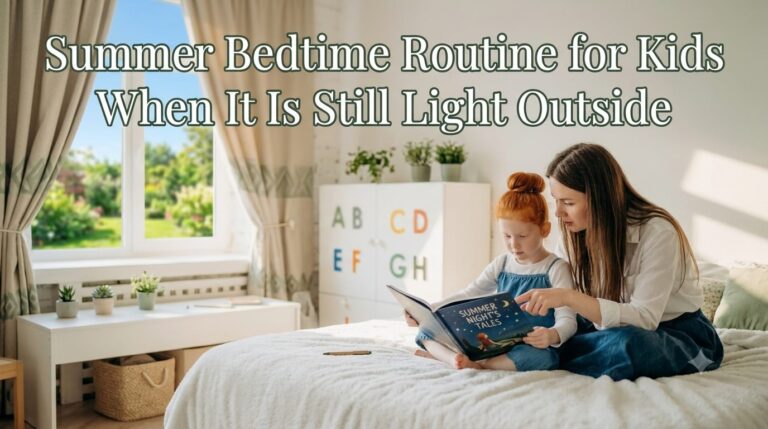
Attach reading to an existing calm moment such as after lunch or before bed. Let the child choose the format and keep the first goal easy enough to complete.
- Use short reading prompts instead of only minutes or page counts.
- Let kids choose books that feel easy sometimes.
- Pair reading with a cozy cue: snack, blanket, porch, or bedtime lamp.
- Track variety, not perfection.
- Celebrate consistency weekly instead of waiting until summer ends.
What to track on a flexible reading challenge
Track experiences—reading outside, hearing an audiobook, choosing a comic, or sharing a book with someone—so different readers can participate successfully.
- Book or format chosen
- A short reading cue
- Independent and shared reading
- Different genres or topics
- Audiobook listening
- A weekly celebration point
Try it in one real situation
Ask the child to pick three prompts that sound fun and one that feels new. Put those prompts where books are kept. At the end of the week, talk about a favorite character or fact instead of checking comprehension like a test.
Common mistakes to avoid
Do not make book difficulty the only measure of success. Rereading, picture books, comics, and listening can all sustain a reading habit.
- Making every book level-perfect.
- Turning reading into a daily battle right before bedtime.
- Rewarding only long books or independent reading.
Printable next step
Choose a tracker that rewards curiosity and consistency:
You can also browse the related toolkit categories:
Frequently asked questions
How do you make a summer reading challenge fun?
Use playful prompts, let kids choose books, and include read-alouds, audiobooks, library trips, and outdoor reading.
Should preschoolers use a reading log?
Preschoolers can use a picture-based tracker that celebrates being read to, story time, and book choices.
References
Featured image source: open-license image previously uploaded from Wikimedia Commons.