Last updated: June 2026
When school is out, screens can become the default answer to every empty moment. Parents do not want to police devices all day, but vague rules often create more arguing, not less.
If you are searching for a before screen time checklist summer, you probably do not need a perfect summer schedule. You need a repeatable system that your child can understand and that you can actually keep using on tired days.
Quick answer: A before screen time checklist works because it makes the rule external. Instead of a parent saying no again and again, the child can see the few things that need to happen first.
Why this summer problem feels so hard
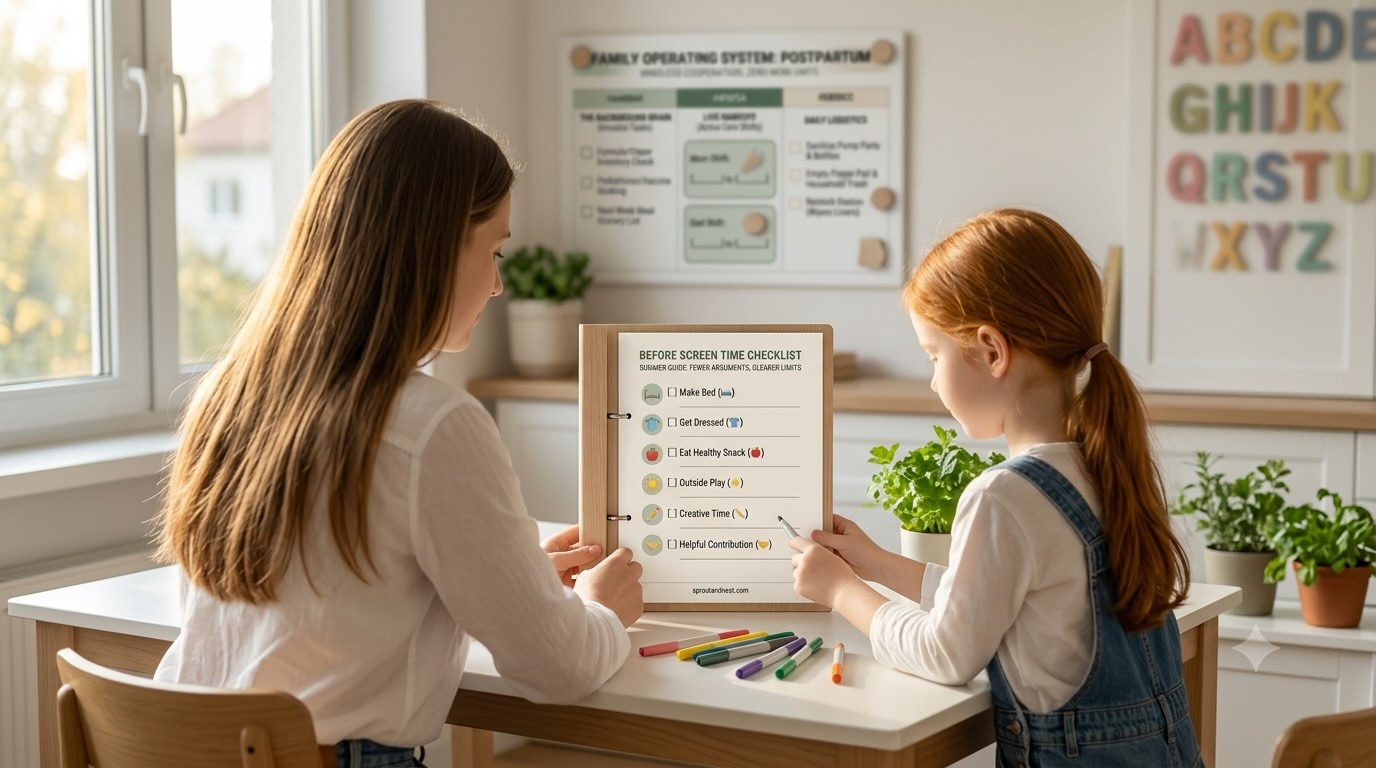
Screen conflict often begins before a device turns on because the start and stop conditions are unclear. A visible before-screen list moves the rule out of a repeated parent-child debate.
The simplest way to build a before-screen summer checklist
Write the sequence in the order it happens and define the screen window separately. Children should be able to tell both what comes first and when screen time ends.
- Write the checklist in the same order every day.
- Include body care: dressed, teeth, breakfast, and water.
- Add one movement block before devices.
- Add one reading, creative, or helpful task.
- Keep screen time in a known window instead of sprinkling it across the day.
Items for a fair before-screen checklist
Keep the condition consistent and achievable: body care, movement, and one responsibility are easier to remember than a changing list of chores.
- Get dressed and complete hygiene
- Eat breakfast and drink water
- Move the body or go outside
- Complete one helpful task
- Choose reading or creative time
- Confirm the screen window
Try it in one real situation
Introduce the checklist during a calm moment, then walk through it once together. Decide in advance what happens when an item cannot be completed because of weather, illness, or an outing. That backup rule prevents the checklist from changing with adult energy.
Common mistakes to avoid
Do not keep adding tasks after the child has started. A moving finish line makes the tool feel punitive and invites more bargaining.
- Making the checklist feel like a punishment.
- Changing the rule depending on parent energy.
- Letting screens start before the first routine anchor is done.
Printable next step
Use one companion printable to make the boundary easy to see:
You can also browse the related toolkit categories:
Frequently asked questions
What should kids do before screen time in summer?
A simple list might include getting dressed, eating breakfast, going outside, reading, helping with one task, and cleaning up the current mess.
Does a checklist stop screen-time meltdowns?
It can reduce arguments by making expectations visible, but children may still need help transitioning away from devices.
References
Featured image source: open-license image previously uploaded from Wikimedia Commons.