Quick answer: Plan a screen-free road trip in short travel blocks. Pack one looking game, one listening activity, one drawing or writing option, and one comfort item per child; rotate them instead of offering everything at departure. Build in safe stops for bathroom, food, and movement, and keep every passenger correctly restrained throughout the drive.
A binder with forty pages can fail before the first exit if the crayons roll under the seat and every activity appears at once. The better unit is not “enough entertainment for six hours.” It is the next manageable stretch between departure, snack, a story, a rest stop, and arrival.
Safety sets the limits for every activity
The National Highway Traffic Safety Administration says everyone should be buckled on every trip and that children need an age- and size-appropriate car seat, booster, or seat belt. Its road-trip safety guidance also states that children under 13 should ride correctly restrained in the back seat.
Before choosing activities:
- verify the restraint and installation using the manufacturer’s instructions and trusted inspection resources;
- keep activities from interfering with harnesses, seat belts, or the driver;
- avoid hard, heavy, sharp, breakable, or very small loose objects;
- give food only when the supervising adult decides it is safe and appropriate;
- make the adult passenger—not the driver—responsible for passing or retrieving items.
A printable organizes the trip; it does not change vehicle or restraint safety.
Divide the drive into travel blocks
Draw the route as a simple sequence children can understand:
- Leave home.
- First driving block.
- Bathroom and movement stop.
- Second driving block and meal.
- Final activity.
- Arrival routine.
Use landmarks, towns, or stops instead of repeatedly promising minutes to a child who cannot interpret them. “After the bridge, we stop for lunch” is more concrete than “not much longer.” Keep the route flexible for traffic, weather, and safety needs.
Pack four activity types
Look
Try picture bingo, color spotting, vehicle searches, alphabet signs, cloud shapes, or “find three things used on a farm.” Choose targets that are common enough to avoid a forty-minute wait for one specific object.
Listen
Use an audiobook, family music playlist, child-safe podcast, or a story told one sentence at a time. Download audio before leaving areas with reliable service and keep the volume low enough for the driver to hear the road and passengers.
Make
Offer a clipboard, washable crayons, a travel journal, reusable sticker page, or simple drawing prompt. Avoid activities that require precise work when motion makes the child uncomfortable.
Rest
Pack one familiar soft comfort item that does not interfere with restraint use. Quiet looking out the window counts as an activity; children do not need a new prompt every minute.
Choose activities by age and cleanup
Toddlers
Use sturdy picture cards, familiar songs, simple “find a truck” prompts, and one safely attached or adult-managed soft item. The separate toddler road-trip guide focuses on shorter attention windows and adult handoffs.
Preschoolers
Try picture bingo with four to nine spaces, color hunts, story prompts, and reusable drawing pages. Give one instruction at a time.
Early elementary children
Use travel journals, license-plate letters without recording personal data, map landmarks, audiobook chapters, or collaborative stories. Let the child save one activity for the final stretch.
Siblings
Prepare individual pouches and one shared listening choice. Avoid a competitive game when only one child can see the target or when scoring creates conflict.
A six-hour example
This is a constructed example, not a required stop schedule.
- Departure: children see a picture route with two planned stops.
- Block one: familiar music, window bingo, then quiet time.
- Stop one: bathroom, water, and movement in a safe designated area.
- Block two: audiobook chapter followed by drawing.
- Meal stop: eat, check the route, and reset activity pouches.
- Final block: saved sticker page, family story, then the arrival preview.
The adult changes the order if someone feels ill, traffic worsens, or safety requires an earlier stop.
Prepare rest stops as transitions
At each stop, prioritize bathroom or diaper needs, water, food, and movement before opening another activity. The NHTSA’s car-seat and booster-seat resources explain how to choose and use restraints; check the child’s buckling again before returning to the road.
Tell children the re-entry sequence: “Bathroom, ten jumping games in the safe area, water, then buckle and choose audio.” Do not let a movement reset happen near moving vehicles or outside the adult’s direct supervision.
Pack a binder that stays usable
Use fewer pages and a better container:
- five to eight activity pages per child;
- one clipboard or slim folder;
- a small number of washable drawing tools in a closed pouch;
- completed pages stored behind unused ones;
- one trash or used-snack bag managed by the adult;
- one activity reserved for the final block.
Place all items where the adult passenger can reach them without unbuckling. The driver should not retrieve a dropped marker.
When the screen-free plan stops working
The child rejects every page. Stop offering pages. Use audio, conversation, or quiet looking until the next safe stop.
Car sickness begins. Put away close visual work and respond to symptoms. Ask the child’s pediatrician in advance about individualized prevention or treatment; do not use medication advice from a printable.
Siblings argue over materials. Return to separate pouches or a shared listening activity.
The drive is longer than expected. Protect the final saved activity, add a safe stop when needed, and adjust arrival expectations.
An adult decides to use a screen. That does not make the trip fail. Set the stopping point and next transition before turning it on; the screen-time transition plan can help.
Optional printable pack
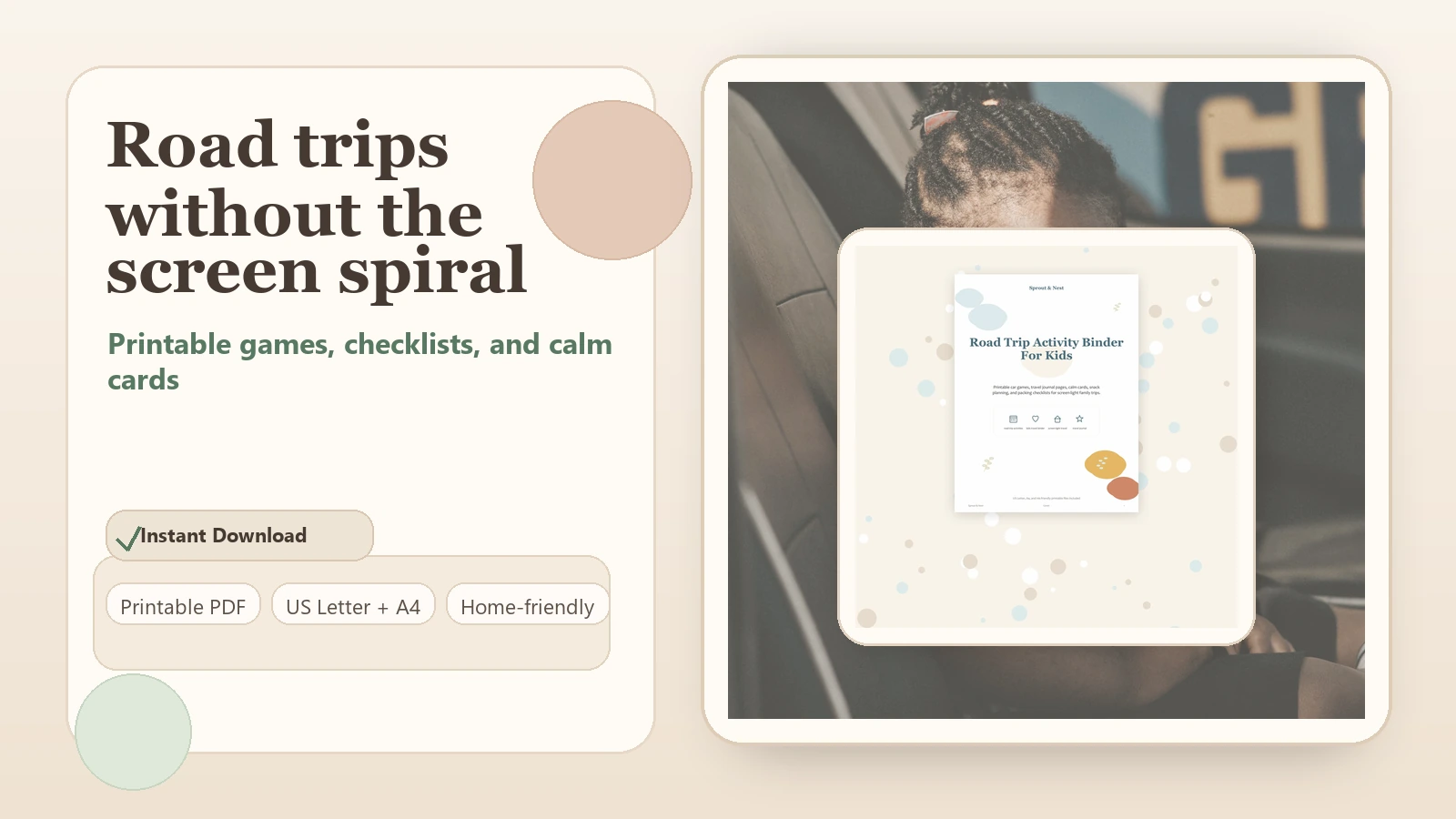
The Road Trip Activity Binder for Kids provides looking, drawing, and journal pages. A smaller free road-trip bingo and packing checklist may be enough for a shorter drive. Print only the pages assigned to a real travel block.
Frequently asked questions
How many activities should I pack per child?
Start with one looking, listening, making, and resting option, then add a small reserve for a long trip. More materials can create clutter without extending attention.
Are lap trays safe in the car?
Products, vehicles, and restraint setups differ. Follow the vehicle, car-seat, and product manufacturers’ instructions and avoid anything that interferes with correct restraint use or creates a hard projectile.
How often should children take a road-trip break?
There is no single schedule for every child or journey. Plan safe stops around the route and individual needs, and stop earlier for bathroom, feeding, motion sickness, driver fatigue, or another safety concern.
Does screen-free mean no devices at all?
It can, but a family can also plan a mostly screen-free drive with a defined device window. The useful goal is a safer, manageable trip—not proving that every mile was device-free.