Last updated: June 2026
A pool day can go from fun to frantic fast: someone forgot goggles, everyone is hungry, the sunscreen is missing, and the wet clothes have nowhere to go.
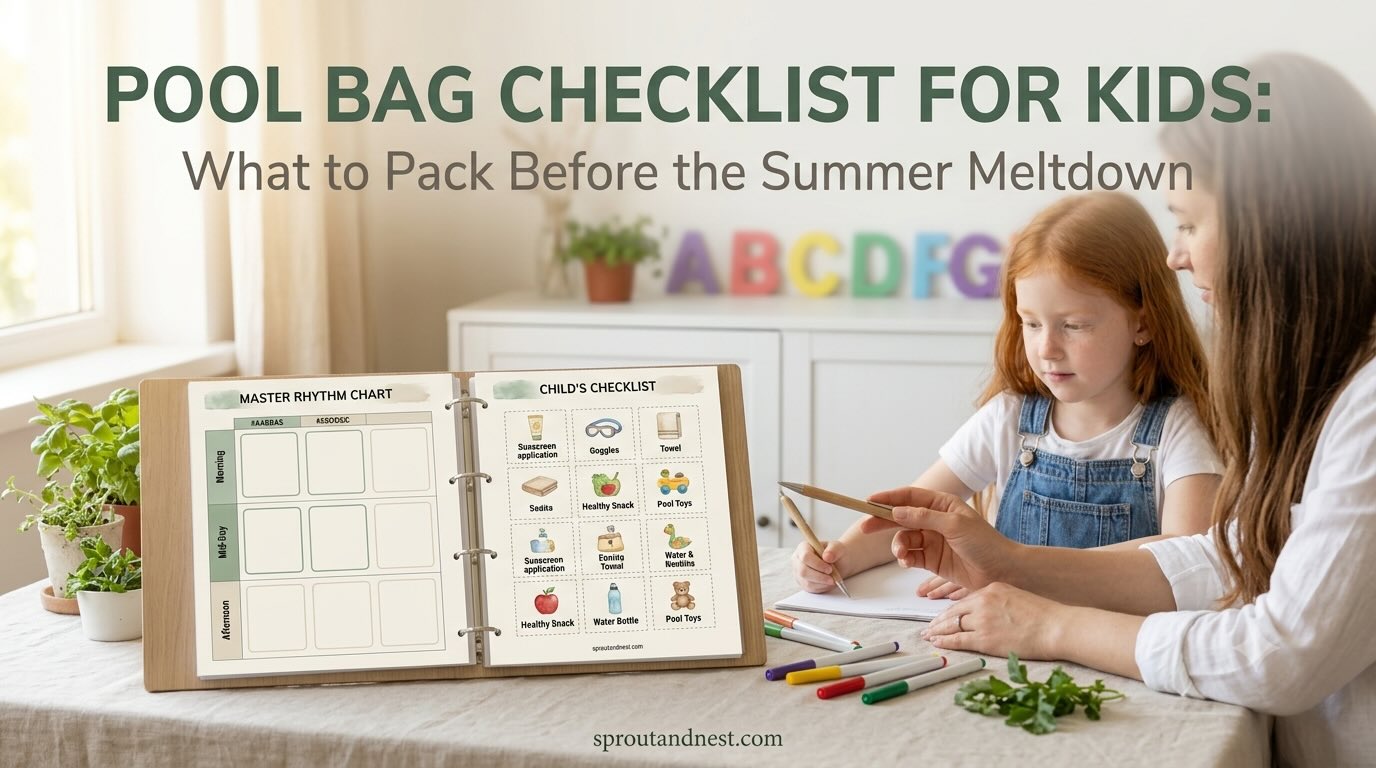
If you are searching for a pool bag checklist for kids, you probably do not need a perfect summer schedule. You need a repeatable system that your child can understand and that you can actually keep using on tired days.
Quick answer: A pool bag checklist for kids should include towels, sunscreen, water bottles, snacks, dry clothes, wet bag, goggles, sandals, hair ties, small first-aid items, and a clear after-pool transition plan.
Why this summer problem feels so hard
A pool outing has two separate packing problems: safe, comfortable swimming and the wet, hungry transition afterward. Treating those as separate phases makes the bag easier to use.
The simplest way to build a pool day packing checklist
Use one small pouch for sunscreen and essentials, one dry bag for clothes, and one wet bag for used swimwear. Refill the same kit after each trip.
- Pack the night before if the pool is a regular summer outing.
- Use one pouch for sunscreen and small safety items.
- Bring two bags: clean/dry and wet/used.
- Pack a protein snack and water before treats.
- Create a leaving routine so kids know what happens after the last swim.
Sections for a reusable pool-bag checklist
Keep safety items easy to reach and separate clean supplies from wet gear. Confirm the facility's rules and maintain active supervision regardless of what is packed.
- Swimwear and facility-required gear
- Sun protection
- Water and a substantial snack
- Towels and dry clothes
- Wet-item storage
- A leaving and car-seat reset
Try it in one real situation
Pack the bag the night before and keep the leaving snack inaccessible until the final transition. After the trip, wash and replace only the used items, then return the pouch to its storage spot. This turns the next outing into a quick check rather than a full repack.
Common mistakes to avoid
A packing list does not cover supervision. It should support the outing while adults continue to follow water-safety and facility guidance.
- Packing only swim gear and forgetting the post-pool reset.
- Letting snacks and wet clothes share the same bag.
- Relying on memory every single pool trip.
Printable next step
Use these tools to separate packing from the child's transition plan:
You can also browse the related toolkit categories:
Frequently asked questions
What should be in a pool bag for kids?
Towels, sunscreen, hats, water, snacks, goggles, dry clothes, wet bag, sandals, and any needed comfort or safety items.
How do you make pool exits easier?
Use a visual ending cue, offer one last activity, and have dry clothes and snack ready before leaving.
References
Featured image source: open-license image previously uploaded from Wikimedia Commons.