Quick answer: A preschool calm-down plan has three phases: prepare when calm, protect safety with few words during the peak, and reconnect afterward. Teach two or three coping choices the child can already use, such as moving, squeezing a pillow, getting water, or sitting near an adult. The goal is not instant silence; it is a safe path through the feeling.
A calm-down plan is different from a calm-down corner. The corner is one possible place. The plan is what the adult and child do before, during, and after a hard moment—whether the family is at home, in a store, or leaving the playground.
Phase 1: prepare while the child is calm
Choose four simple elements:
- Early body clues: tight fists, faster feet, hiding, louder voice, or tears.
- Feeling words: angry, sad, worried, disappointed, and tired.
- Two coping choices: one active and one quiet.
- A return step: rejoin, repair, ask for help, or try the routine again.
Practice one clue and one choice for thirty seconds. The AAP’s guide to helping young children manage big feelings describes noticing, naming, and acknowledging emotions while supporting the child’s need.
Phase 2: protect safety and reduce language
During intense distress:
- Move close enough to supervise.
- Block hitting, throwing at people, running into danger, or another unsafe action.
- Name what you see without demanding an explanation.
- Offer one or two familiar choices.
- Wait and stay available.
Try: “You are furious that play ended. I will keep everyone safe. Push the wall or sit beside me.” Avoid asking five questions or repeating the whole rule.
Phase 3: reconnect and repair
When the child can participate again:
- offer water, connection, or a quiet minute;
- state the boundary once;
- repair harm with a concrete action;
- return to the next routine step;
- later, adjust one trigger or transition.
Do not require a detailed emotional debrief every time. A preschooler may learn more from practicing the missing action tomorrow.
Build a two-choice coping menu
Choose by the child’s pattern:
| If the child needs movement | If the child needs less input | If the child needs connection |
|---|---|---|
| Wall pushes, carry a cushion, stomp in place | Quiet chair, headphones without media, dimmer space | Sit nearby, hold a hand if wanted, slow breathing together |
| Walk with an adult, animal steps | Look at a book, cover with a light blanket while supervised | Short validating words, water together |
Never force touch, breathing, eye contact, or emotion labels. A coping choice that increases distress is not the right choice in that moment.
Three worked examples
Leaving the playground
Before: show “last slide → shoes → car water.” During: “You wanted to stay. I will help your body leave safely.” After: drink water and point to the next picture. Later, change the warning if the last-slide promise is unreliable.
A sibling knocks down a build
Separate for safety, attend to injuries, and offer space or a pillow squeeze. When both children are ready, restore materials or choose separate play areas. Do not force an immediate hug.
A denied request in a store
Keep the limit short: “We are not buying it. Hold the cart or walk beside me.” If safety deteriorates, leave or move to a quieter area when possible. Save the explanation about money or planning for later.
Use a visual plan without making it a demand
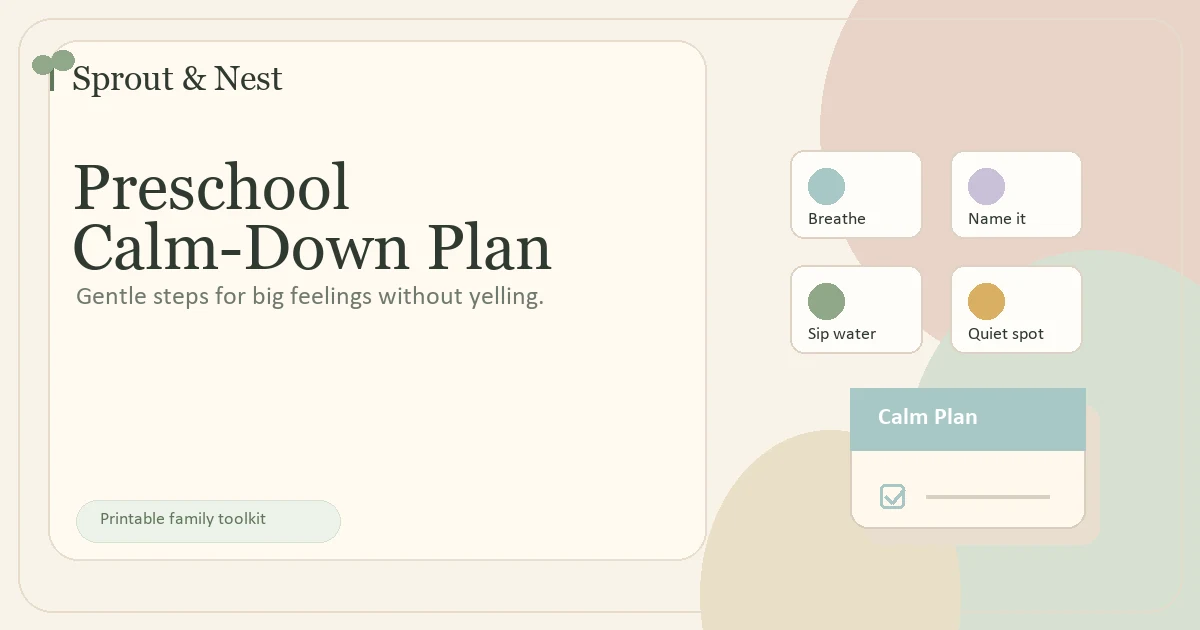
A small card can show:
- Notice body.
- Choose move or quiet.
- Get help.
- Return or repair.
Point to the card as an invitation. Do not insist that the child complete every square before receiving comfort. For a dedicated supportive space, see the calm-down corner guide.
The adult needs a plan too
Choose one action for yourself: lower your voice, put both feet on the floor, move breakable objects, call another adult, or say, “I need ten seconds before I talk.” The AAP’s emotional development guidance recommends acknowledging and validating feelings while maintaining boundaries around behavior.
If you fear you may hurt the child or lose control, create immediate distance while maintaining child safety and seek help from a trusted adult or local emergency support.
What commonly breaks the plan
Too many choices. Reduce the menu to one active and one quiet option.
The plan appears only during conflict. Practice briefly when the child is available.
Calm becomes a command. Ask for safety, not a specific emotional state.
The adult keeps explaining. Use one observation, one boundary, and one choice.
The routine resumes too quickly. Give a small landing step before another demand.
Every incident is treated as identical. Track whether hunger, sleep, transitions, noise, or conflict changes what helps.
When to seek extra help
Contact the child’s pediatrician or another qualified professional when distress is frequent or intense, causes injury, disrupts sleep or preschool, includes loss of skills, occurs across settings, or does not improve with ordinary support. Bring specific observations rather than a score.
For repeated hitting or biting, use the separate toddler safety-response guide. A printable plan does not diagnose or treat a developmental, behavioral, or mental-health condition.
Optional printable plan
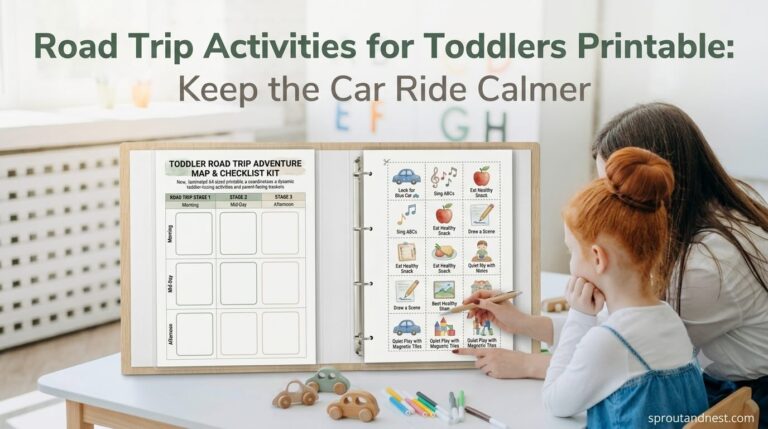
Test the four-step card by hand. If the child recognizes it, the Calm Parenting Scripts for Preschool Meltdowns can make the response portable. Keep the coping menu small enough to use away from home.
Frequently asked questions
Should a calm-down corner be used as punishment?
No. A supportive space should not mean forced isolation or shame. Stay available and keep safety boundaries separate from the coping choice.
What if my child refuses every choice?
Stop offering more. Reduce language, maintain safety, and stay nearby. Practice or change the menu later.
How do I teach the skills before a meltdown?
Use short play: notice a doll’s body clue, choose one action, then return to play. End before it becomes a lesson.
How long should calming take?
There is no universal time. Focus on safety and whether the child can take the next small action, not on producing calm by a deadline.