
Last updated: June 2026
For many ADHD families, summer removes the school structure that quietly held the day together. Suddenly every task requires parent prompting: get dressed, eat, move, stop screens, start quiet time, go to bed.
If you are searching for a ADHD summer routine for kids, you probably do not need a perfect summer schedule. You need a repeatable system that your child can understand and that you can actually keep using on tired days.
Quick answer: An ADHD summer routine should be built from visible anchors, movement breaks, low-stimulation transitions, and tiny checklists. The goal is not a perfect schedule; it is fewer decisions and fewer repeated instructions.
Why this summer problem feels so hard
Without school-day cues, children with ADHD may have to hold too many next steps in working memory. Long verbal reminders can disappear quickly, especially during play or a preferred activity.
The simplest way to build a ADHD-friendly summer anchor routine
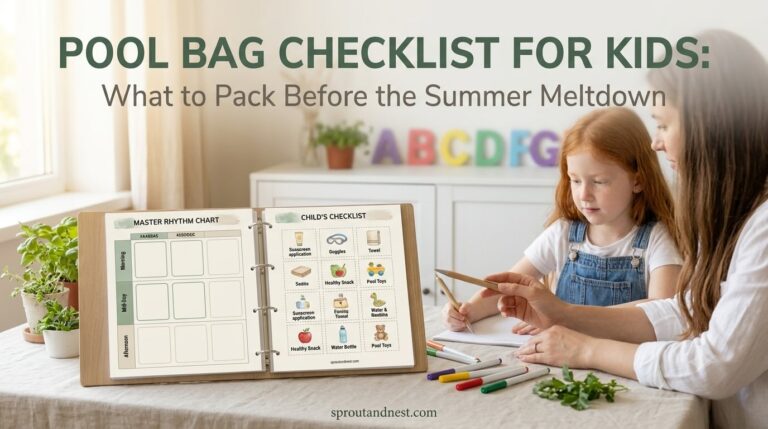
Choose three dependable anchors—morning start, afternoon reset, and evening close—and give each no more than four visible steps. Use the same cue to begin each block.
- Pick three anchor times: morning start, afternoon reset, and evening close.
- Use a visual checklist with no more than four steps per block.
- Build movement into the routine before asking for focus.
- Use timers and first-then boards for transitions.
- End the day with a reset basket for papers, clothes, and devices.
What to put on an ADHD-friendly summer routine
Externalize the plan in short blocks and place movement before focus-heavy tasks. The routine should reduce remembering and switching demands; it is a home support, not a treatment plan.
- A clear start cue
- Two to four steps per block
- Movement before seated focus
- A visible timer or first-then cue
- A planned recovery break
- One place for end-of-day items
Try it in one real situation
Test only the morning block first. Put the card where the first action happens, not across the room, and point to it before repeating directions. Track which transition needs adult help and which can become independent. Adjust the number of steps before changing rewards or consequences.
Common mistakes to avoid
More detail is not always more support. A dense chart can create another task to manage, so reduce visual clutter and keep choices limited.
- Expecting a child to remember a verbal plan all day.
- Waiting until dysregulation to introduce the next step.
- Using a reward chart that requires too much tracking.
Printable next step
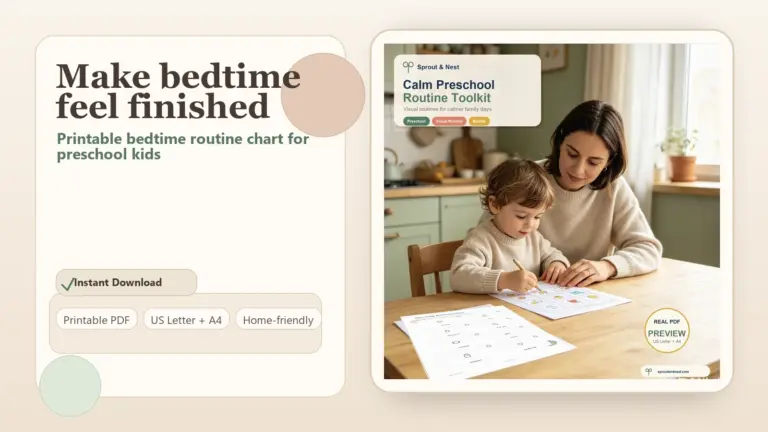
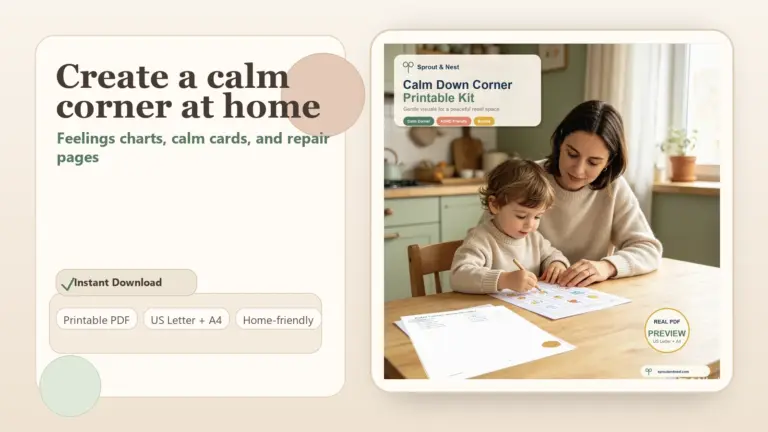
Pair the routine with one visual tool rather than several competing charts:
You can also browse the related toolkit categories:
Frequently asked questions
What is the best summer routine for ADHD kids?
The best routine is visible, flexible, and repetitive. It should reduce decisions instead of adding more things to remember.
Should ADHD kids have free time in summer?
Yes. Free time is important, but many ADHD kids still need a simple beginning, middle, and end to the day.
References
Featured image source: open-license image previously uploaded from Wikimedia Commons.