Last updated: June 2026
Summer information scatters everywhere: camp emails, swim lesson times, playdates, library events, snack needs, sunscreen reminders, and the one form you were supposed to print yesterday.
If you are searching for a family summer command center printable, you probably do not need a perfect summer schedule. You need a repeatable system that your child can understand and that you can actually keep using on tired days.
Quick answer: A family summer command center brings the week into one visible place: calendar, care coverage, meals and snacks, packing lists, screen rules, reading goal, and quick notes.
Why this summer problem feels so hard
Summer information arrives through camp emails, texts, paper forms, library dates, and family plans. A command center helps only when it brings those details into one current weekly view.
The simplest way to build a one-page summer command center
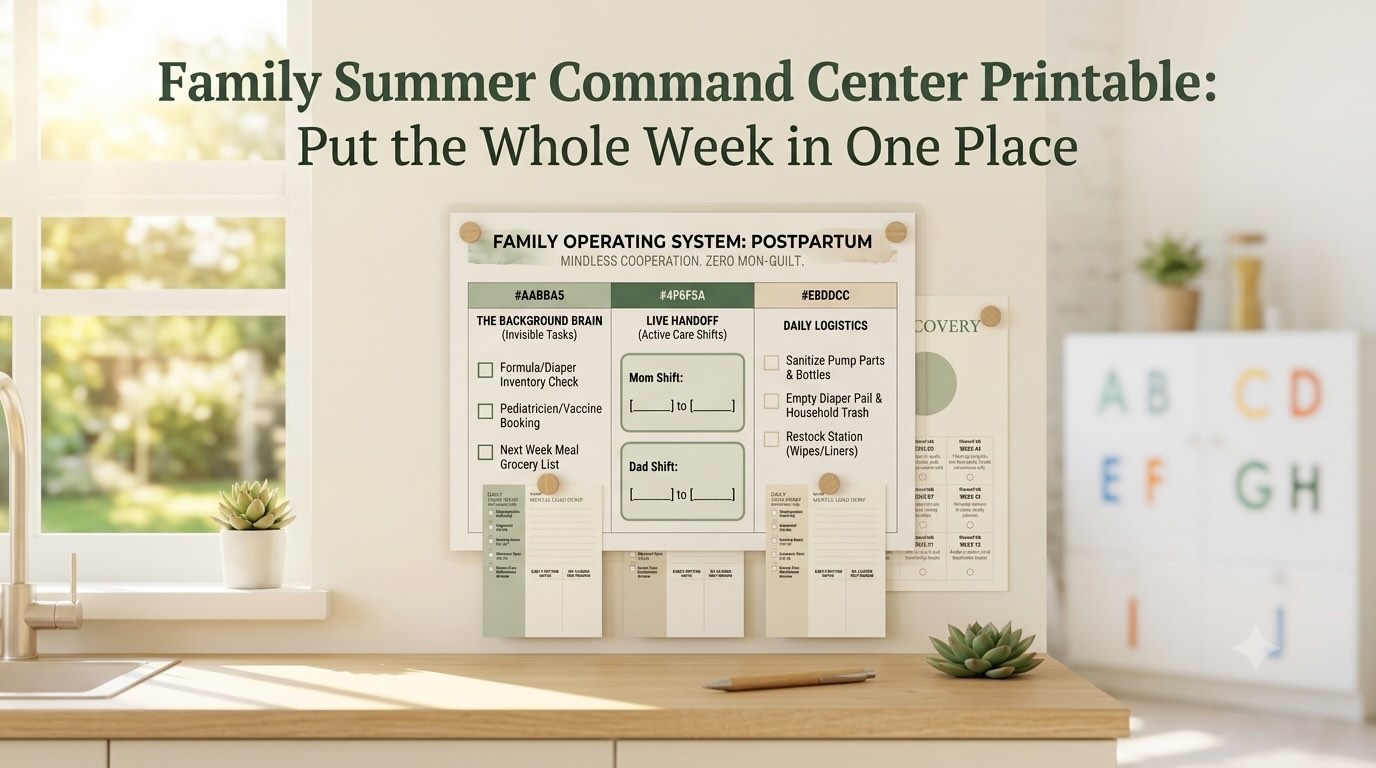
Start with the weekly calendar, then attach repeating lists for the places your family actually goes. Add a small handoff area for the adult responsible for pickup or care.
- Choose one wall, fridge, binder, or clipboard as the command center.
- Write the week before adding daily details.
- Add repeating packing lists for pool, camp, library, and travel.
- Include screen-time and quiet-time expectations.
- Reset the page every Sunday night.
Zones for a summer family command center
Give every family member one place to check what is happening and what must leave the house. The system should be simple enough to reset in a few minutes each week.
- This week's fixed events
- Who handles each pickup
- Forms or items to return
- Reusable outing packing lists
- Meal and snack notes
- A Sunday reset box
Try it in one real situation
Choose one physical location that children and caregivers can see. During the weekly reset, remove expired paper, copy only confirmed events, and stage the next needed item. Photograph the finished board for any caregiver who will not be in the home.
Common mistakes to avoid
Do not duplicate the same plan across several paper systems. Decide which view is authoritative and use other lists only for packing or detail.
- Using too many separate planners.
- Hiding the plan in a phone where kids cannot see it.
- Forgetting to include caregiver notes.
Printable next step
Build the center from one weekly page and one repeatable list:
You can also browse the related toolkit categories:
Frequently asked questions
What goes in a family summer command center?
Weekly calendar, care plan, meal and snack notes, activity list, packing checklists, screen rules, and important reminders.
Is a command center better on paper or digital?
Paper works well for young kids and caregivers because it is visible. Digital calendars can still hold appointments and alerts.
References
Featured image source: open-license image previously uploaded from Wikimedia Commons.