Quick answer: Prepare the home for two people: a recovering parent and a newborn. Before birth, establish a safe sleep space, one reachable recovery area, feeding and diaper supplies, food and water, care-team contacts, and clear ownership for nights, visitors, errands, pets, and older children. Follow discharge instructions and infant-safety guidance instead of buying supplies for every possible scenario.
The nursery may be finished while the place where the parent will actually sit has no charger, water, or path to the bathroom. A successful home setup begins with movement through an ordinary day: where someone rests, feeds, changes the baby, eats, stores instructions, and asks for help.
Prepare routes before preparing baskets
Walk through the home from the likely resting place to the bathroom, kitchen, baby sleep space, and exit. Remove tripping hazards, move frequently used items within reach, check lighting for nighttime movement, and decide where another adult will sleep if shifts are planned.
Do not assume recovery will follow one exact route. Birth method, mobility, feeding plans, pain, and medical instructions vary. Keep the setup flexible until the hospital or birth team provides individualized discharge guidance.
Set up a safe infant sleep space first
The American Academy of Pediatrics’ safe sleep guidance recommends placing babies on their backs for sleep on a firm, flat, non-inclined surface that meets safety standards, without loose bedding, pillows, bumpers, or soft objects in the sleep area.
Review the full guidance with every caregiver. A decorative lounger, swing, car seat outside travel, or adult bed should not quietly become the default sleep location because the household is exhausted. Put the approved sleep space where it can be used during the hours the family expects to rest.
Keep a second copy of safe-sleep instructions with caregiver information rather than relying on verbal memory.
Create one parent recovery area
Start with one place instead of stocking every room. Place a small table or cart within easy reach and leave room for the items specified by the care team.
- Water bottle and simple food.
- Phone charger and care-team numbers.
- Discharge instructions and prescribed medication schedule.
- Clean cloths and a small waste container.
- A notebook for symptoms and questions.
- Feeding supplies appropriate to the family’s plan.
Ask the obstetric care team what recovery supplies are appropriate for the expected circumstances, then update the station after delivery. Do not pre-plan medication changes or treatments from a general checklist.
Build feeding support around the actual plan
Whether the family plans breastfeeding, pumping, formula feeding, combination feeding, or is still deciding, prepare for access and cleaning rather than an idealized schedule.
- Choose where feeding is likely to happen during the day and at night.
- Place water and food for the parent within reach.
- Identify a clean area for equipment and the family’s washing process.
- Save contact information for pediatric and lactation support if used.
- Keep instructions for formula preparation, pumping, medications, or supplementation from the relevant professionals.
A generic home checklist cannot decide how often or how much a particular baby should feed. Bring those questions to the pediatric or feeding care team.
Use the diaper station for care, not storage
Place a small quantity of daily supplies near the changing location and keep backups elsewhere. The station may include diapers, wipes or clinician-recommended alternatives, clean clothing, a washable mat, and a lidded disposal option.
Choose a stable surface and keep one hand on the baby when using an elevated changing area. Store plastic packaging, creams, medicines, cords, and small items out of reach. Restock from a short list instead of piling a month of supplies around the baby.
Put medical information in one visible location
Create a page with:
- obstetric care contact and after-hours instructions;
- pediatric clinician and first appointment details;
- pharmacy information;
- local emergency number and hospital route;
- allergies, current medications, and discharge instructions;
- one trusted person who can speak up or provide transport.
The CDC lists urgent maternal warning signs that can occur during pregnancy and in the year after delivery. Review the official list with the support person and seek immediate care for urgent symptoms. If something feels seriously wrong, say that the person is pregnant or was pregnant within the last year.
Assign ownership for the first week
A help list works only when tasks have owners. Write names beside these responsibilities before labor begins:
- Food: who selects, orders, reheats, and cleans up.
- Nights: who handles each non-feeding task and when the next handoff occurs.
- Appointments: who drives, carries supplies, and records questions.
- Household: laundry, dishes, trash, mail, pets, and shopping.
- Other children: school, meals, bedtime, and backup care.
- Visitors: who schedules, confirms health, and ends the visit.
“Partner helps” is not ownership. “Alex handles dinner from choosing through cleanup for seven days” is.
A realistic food plan
Count complete eating moments, not freezer containers. A casserole still requires thawing, heating, serving, and dishes. Prepare a mix of:
- foods that can be eaten with one hand;
- simple breakfasts and substantial snacks;
- ready meals with clear heating labels;
- a grocery delivery or pickup backup;
- options that fit allergies, culture, budget, and medical advice.
Put the list where helpers can see it. Visitors who bring food should know the household’s storage space and container preference.
Write visitor rules as logistics
Decide the maximum visit length, notice required, illness policy, handwashing expectation, whether holding the baby will be offered, and which practical task a visitor can take. Use one person to communicate the plan.
A short message is easier to enforce: “Please arrange visits with Sam. We are keeping them to thirty minutes and may reschedule on the day. Do not visit if you feel unwell.” Follow any additional precautions from the maternal and pediatric care teams.
Test the setup before birth
Run one evening as if the baby were home:
- Dim the lights and walk the nighttime route.
- Locate safe sleep, changing, feeding, and recovery supplies.
- Find the urgent contact page without using a phone search.
- Prepare one meal and clean up using the planned system.
- Ask the support person to explain their first-week responsibilities.
Anything that depends on the recovering parent giving detailed instructions is not finished yet.
What not to overprepare
Large quantities of one product. Babies and recovery needs vary; keep receipts and start with manageable amounts.
Medical supplies without guidance. Wait for recommendations from the relevant care team.
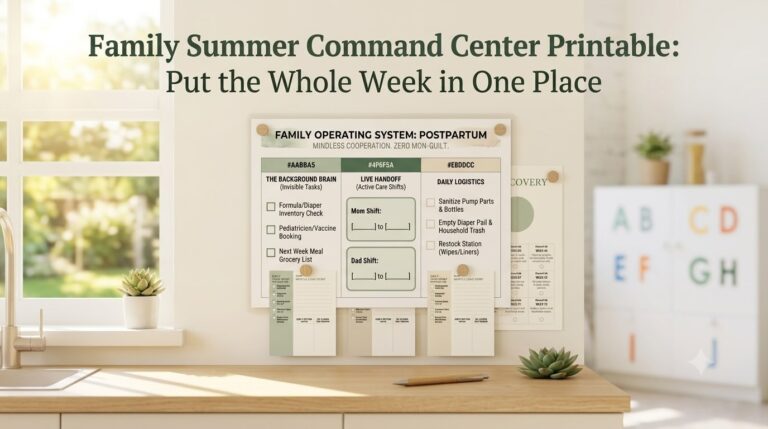
Multiple tracking systems. Choose a single handoff method. The postpartum recovery planner guide separates maternal notes, baby notes, and household work.
A showroom nursery. Prioritize safe sleep and reachable daily care over décor that does not support the first weeks.
Optional printable checklist
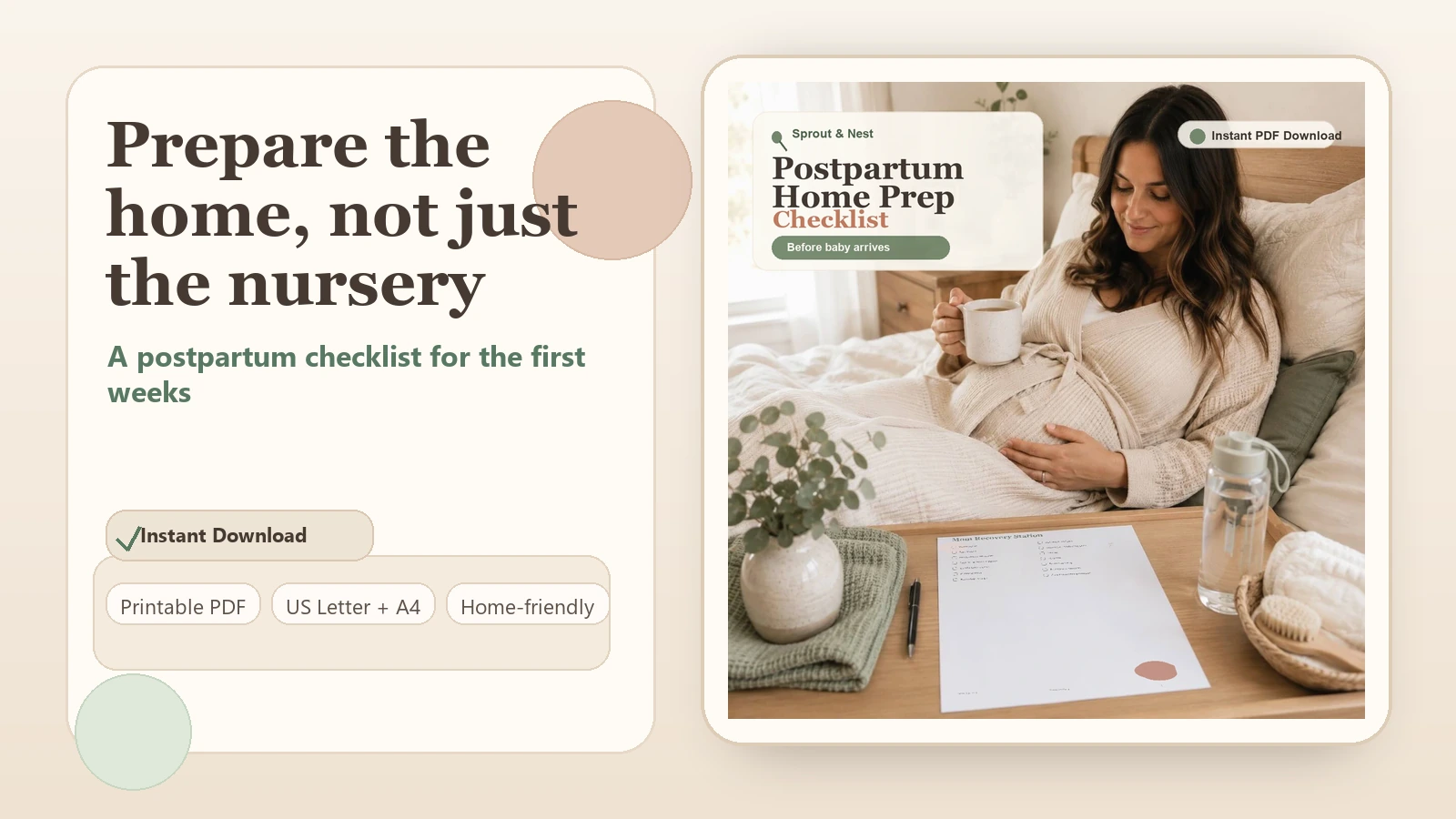
The Postpartum Home Prep Checklist can organize the final walkthrough. Use the pregnancy checklist by week to schedule non-medical preparation without pretending every pregnancy follows the same calendar. A newborn night-shift handoff is useful when two caregivers need a shorter overnight page.
Frequently asked questions
When should postpartum home preparation begin?
Start with safety, contacts, and household ownership when there is enough time to make changes comfortably. Confirm recovery-specific supplies and instructions with the care team closer to discharge.
Do I need a station on every floor?
Not necessarily. One well-placed setup may be easier to maintain. Add a second small supply basket only when the home layout and expected mobility make it useful.
What should a partner prepare?
The partner or support person should own complete tasks: meals, cleaning, communication, transport, other children, pets, or night handoffs. They should also know urgent contacts and warning signs.
Can this checklist replace hospital discharge instructions?
No. Discharge instructions and individualized advice from the maternal and pediatric teams take priority over a general home-preparation list.