Quick answer: Low-prep sensory play needs one safe material, one action, one boundary, and one cleanup plan. Start with water, paper, play dough, blocks, or another age-appropriate material already used safely. Supervise based on the child and activity, avoid small loose parts for children who mouth objects, and stop if the play becomes unsafe or distressing.
“Sensory play” can become a shopping category when the child may be perfectly interested in washing plastic animals with a cloth. The best starting point is not a theme. It is an action the child already repeats: pouring, squeezing, tearing, brushing, stacking, or sorting.
Use the one-one-one-one formula
- One material: water, paper, dough, ice, blocks, or another suitable base.
- One action: pour, transfer, squeeze, tear, scrub, stack, or match.
- One boundary: tray, towel, tub, table, or outdoor area.
- One cleanup: drain, wipe, collect, or return.
Adding more colors, fillers, tools, and story props rarely makes the activity easier to enter. Let the child’s use show what should be added next.
Choose by cleanup time
Under two minutes
- Tear scrap paper into a recycling box.
- Build and knock down a block wall.
- Match clean socks.
- Draw through a sealed reusable sensory bag inspected for leaks.
- Squeeze and roll a small amount of play dough.
About five minutes
- Wash sturdy toy animals in a shallow bowl.
- Transfer ice with a spoon on a towel.
- Paint with water on an outdoor wall or pavement.
- Brush soil from vegetables before an adult prepares them.
- Sort large nature finds collected with supervision.
Best outdoors or in the bath area
- Pour between cups.
- Wash a toy vehicle with a sponge.
- Mix water and large floating objects.
- Paint cardboard with washable materials.
- Use a funnel with water under direct supervision.
Water play always requires active adult supervision. A shallow amount is not a reason to step away.
Fifteen activity prompts from household actions
- Pour water between two stable cups.
- Squeeze a wet sponge into a bowl.
- Brush toy animals with an old toothbrush used only for play.
- Tear paper for collage or recycling.
- Roll, press, and cut dough with child-safe tools.
- Sort large blocks by color or shape.
- Match lids to safe containers.
- Move ice with a large spoon.
- Wash a low outdoor surface with water and cloth.
- Make tracks in dough with toy wheels.
- Wrap and unwrap safe objects in fabric.
- Stack cups by size.
- Listen for and copy household sounds.
- Carry pinecones or large stones into separate bowls outdoors.
- Use a spray bottle to water outdoor plants with an adult.
Use the list as prompts, not a thirty-day curriculum. Repeat what holds attention.
Prepare the boundary before the material
Place the towel, tray, or tub first. Show where the material stays and what happens when it leaves the boundary. Use a neutral script: “Water stays in the tub. If it keeps moving to the floor, we will drain it and try another activity.”
Keep cleanup tools visible. A child can carry the cloth or place tools in a bowl, but the adult retains responsibility for sanitation, wet floors, and safe storage.
Follow the child’s action
If the child spends ten minutes pouring and ignores the matching cards, remove the cards. If they line up containers rather than transferring objects, observe before redirecting. The AAP’s power-of-play guidance emphasizes the developmental value of play and responsive relationships.
The adult can narrate sparingly—“The sponge is full; now the bowl has more water”—without turning open exploration into a quiz.
Make age and safety decisions first
A preschool label does not tell you whether an individual child still mouths objects, throws materials, has allergies, or needs closer support. Avoid choking hazards and materials that are toxic, sharp, breakable, overly hot or cold, or difficult to clean safely. Check product instructions and recall information.
Sensory activities are play, not therapy. The AAP’s overview of sensory integration therapies advises families to discuss developmental or behavioral concerns and proposed therapies with the child’s pediatrician. Do not claim that a home bin treats a condition.
Adapt for children who avoid the material
Participation is optional. Offer a tool between the hand and material, such as a spoon, brush, or cup. Let the child watch, keep hands clean, or choose a different activity. Do not hide disliked textures in a game or insist that touching them is necessary.
For a child who seeks more movement, use carrying, pushing, outdoor water painting, or a supervised household task instead of expecting long seated play.
When sensory play becomes too much work
Setup takes fifteen minutes. Remove the theme and keep the core action.
The bin is dumped immediately. Use less material, a larger boundary, or an activity where dumping is the planned action.
The child asks the adult to perform every step. Model once, then make the first child action obvious and reachable.
Cleanup causes the conflict. preview the ending, keep cleanup short, and assign one child-sized action.
The same filler spreads through the house. move that activity outdoors or stop using the filler.
The activity creates distress. end it calmly and choose a different type of play.
Plan a small rotation
Choose three categories for the week:
- one dry, contained option;
- one water or washing activity;
- one movement or outdoor activity.
Repeat them instead of creating seven themes. The Montessori-at-home guide shows how household tasks can support participation, while the low-mess toddler sensory guide addresses younger children and mouthing risk.
Optional printable planner
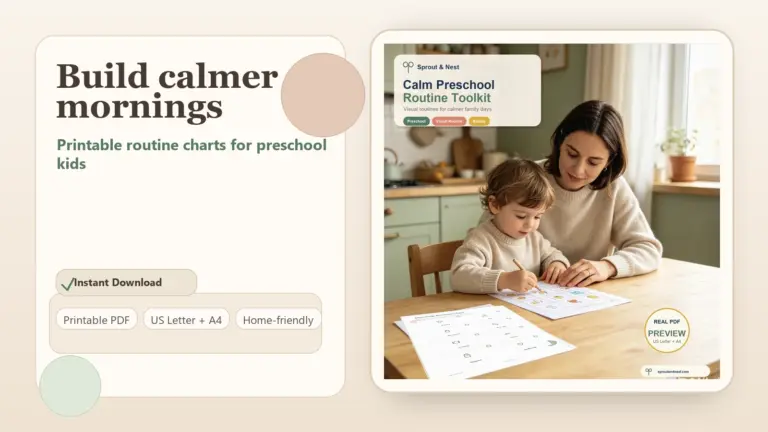
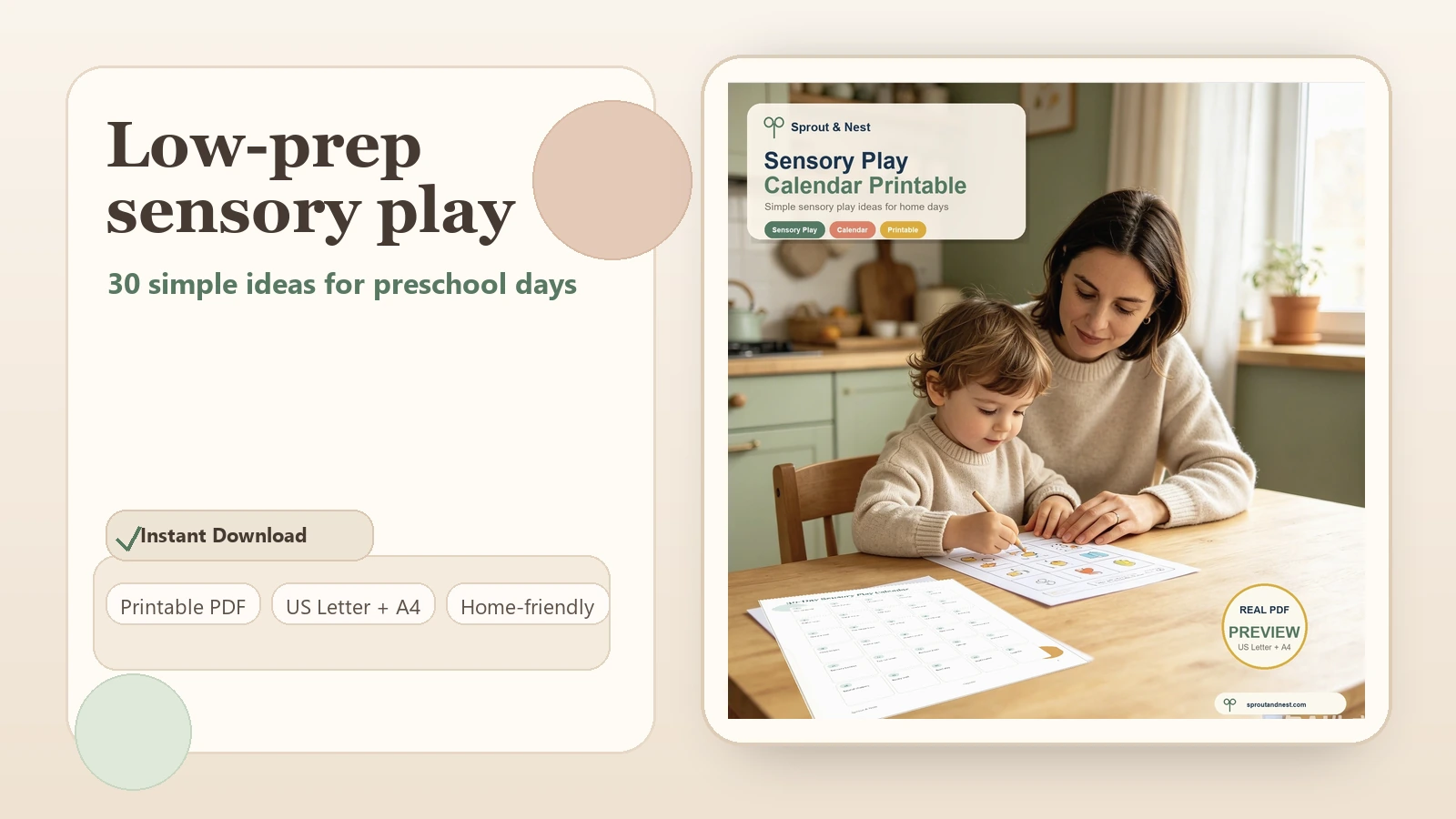
Write three tested activities on the refrigerator first. If a visual rotation reduces planning, the Sensory Play Calendar or Preschool Sensory Bin Planner can organize materials, boundary, supervision, and cleanup. Skip prompts that do not fit the child.
Frequently asked questions
What counts as sensory play?
Play that involves exploring sound, sight, touch, movement, smell, or safe taste experiences can be sensory. Ordinary outdoor and household play often qualifies without a themed bin.
Which activity has the least cleanup?
Blocks, paper tearing into a box, sock matching, drawing, and a small amount of play dough are usually easier to contain than loose fillers.
How often should preschoolers do sensory play?
There is no required schedule. Offer varied, safe play as part of ordinary life and repeat activities the child uses meaningfully.
Can sensory play treat sensory processing problems?
A home activity is not treatment. Discuss persistent developmental, behavioral, feeding, or sensory concerns with the child’s pediatrician or another qualified professional.