Quick answer: A strong preschool drop-off routine gives your child the same short goodbye, the same visual steps, and the same confident handoff every morning. The goal is not to stop every tear. The goal is to make separation predictable enough that your child knows what happens next and trusts that you will come back.
If your child cries, clings, hides behind your legs, or says their stomach hurts before preschool, you are not the only parent walking into the building with a knot in your chest. Preschool drop-off anxiety is common during new classrooms, new teachers, after holidays, or after a big family change. A calm plan helps both of you stop renegotiating the goodbye every morning.
Key takeaways for calmer preschool drop-offs
- Keep the goodbye short, warm, and repeatable.
- Use a visual routine so your child can see what happens before and after school.
- Practice the goodbye at home before the first hard morning.
- Give the teacher a simple handoff script so every adult responds the same way.
- If school refusal lasts more than a week or includes frequent physical symptoms, talk with your pediatrician and the school team.
What is the best preschool drop-off routine for anxious kids?
The best preschool drop-off routine is brief, predictable, and boring in the best possible way. Your child should know the order before you arrive: park, backpack, hug, goodbye phrase, teacher handoff, parent leaves. Repeating the same steps reduces the number of decisions your child has to process when they already feel overwhelmed.
For Sprout & Nest families, a five-minute routine works well because it is long enough to feel loving and short enough to avoid a second wave of panic. Long goodbyes often feel kind in the moment, but for many children they stretch the uncertainty.
The five-minute calm goodbye plan
- Name the plan before you arrive: “First backpack, then hug, then teacher, then I come back after outside time.”
- Use one comfort item if school allows it, such as a small bracelet, heart stamp, or family photo.
- Give one clear goodbye ritual: one hug, one high five, one phrase.
- Say when you return in child-time, not clock-time.
- Hand off to the teacher with a small classroom job.
- Leave after the goodbye. Do not sneak out, but do not restart the goodbye.
- After school, praise the brave step your child did take.
What should you say when your child cries at drop-off?
- “Don’t leave me.” Try: “I love you. Your teacher will help you now. I come back after outside time.”
- “I feel sick.” Try: “Your body feels worried. I will tell your teacher. We are still following the school plan.”
- “One more hug.” Try: “We already did our goodbye hug. Now it is teacher time.”
- “I can’t do it.” Try: “This is hard, and you can take the next step. Backpack first.”
Printable checklist: night before and morning steps
Night before
- Backpack by the door
- Lunch or snack packed
- Clothes chosen
- Comfort item ready
- One sentence about tomorrow’s plan
Morning
- Bathroom
- Get dressed
- Breakfast
- Shoes
- Backpack
- Goodbye ritual
Printable next step: Pair this plan with the Preschool Routines toolkit or browse free printable routine charts.
When preschool drop-off anxiety needs extra support
Some tears are part of adjustment. Extra support is worth considering when your child refuses school for several days, has repeated stomachaches or headaches on school mornings, cannot recover after you leave, or seems anxious in many parts of daily life. In those cases, talk with your pediatrician, teacher, or school counselor.
This article is educational and is not a diagnosis or medical advice.
FAQ
Should I leave if my preschooler is crying?
Usually, yes, after a warm and clear goodbye. Staying to renegotiate often makes the goodbye longer and less predictable. Ask the teacher to message you after your child settles so you can see whether the plan is working.
How long does preschool drop-off anxiety last?
Many children improve after a few consistent days or weeks, especially when home and school use the same routine. If refusal or physical symptoms continue, ask for help rather than waiting it out silently.
Is a visual schedule worth it for preschool drop-off?
Yes. A simple picture schedule can reduce verbal battles because your child can point to the next step. It is especially helpful for preschoolers, anxious children, and children who do better with visual cues.
Sources
- HealthyChildren.org, American Academy of Pediatrics: How to Ease Your Child’s Separation Anxiety
- HealthyChildren.org, American Academy of Pediatrics: School Avoidance Tips for Concerned Parents
- CDC: Essentials for Parenting Toddlers and Preschoolers
Preschool separation anxiety: use one goodbye script every day
When drop-off is emotional, the goal is not to sneak away or restart the goodbye. A short, repeated script gives your child something predictable to hold onto: “Hug, kiss, high five, grown-up comes back after school.”
Pair the script with a visual goodbye plan
Some children calm faster when they can see the goodbye sequence before they feel the separation. A visual routine can show arrival, cubby, hug, teacher, and parent return.
Need a calmer drop-off routine?
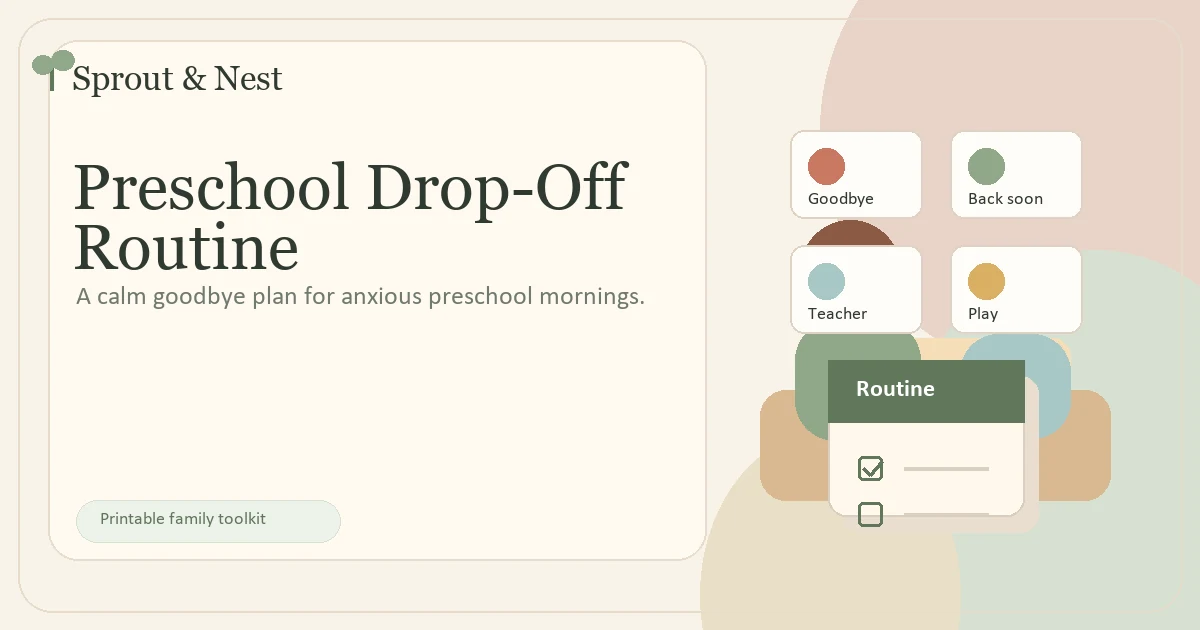
The Preschool Drop-Off Calm Goodbye Kit gives you printable visual steps, goodbye language, and parent notes for anxious mornings.
Preschool drop-off FAQ
Should I sneak out if my child cries at preschool drop-off?
Most children do better with a clear goodbye than a disappearing parent. A predictable routine builds trust, even when the child still feels upset at first.
How long does preschool separation anxiety last?
It varies. Some children adjust in days, while others need several weeks of consistent routines and supportive teachers. If distress is intense or worsening, talk with the preschool and your pediatrician.
What should I say at preschool drop-off?
Use the same short sentence every day. Keep it warm, confident, and final instead of adding new explanations each morning.