Last updated: June 2026
Summer bedtime can feel unfair to everyone. It is still bright outside, neighbors are playing, routines run late, and kids suddenly have energy the moment pajamas appear.
If you are searching for a summer bedtime routine for kids, you probably do not need a perfect summer schedule. You need a repeatable system that your child can understand and that you can actually keep using on tired days.
Quick answer: A summer bedtime routine should start earlier than bedtime itself: dim lights, close screens, use the same visual steps, offer a predictable last connection, and keep the goodbye short.
Why this summer problem feels so hard
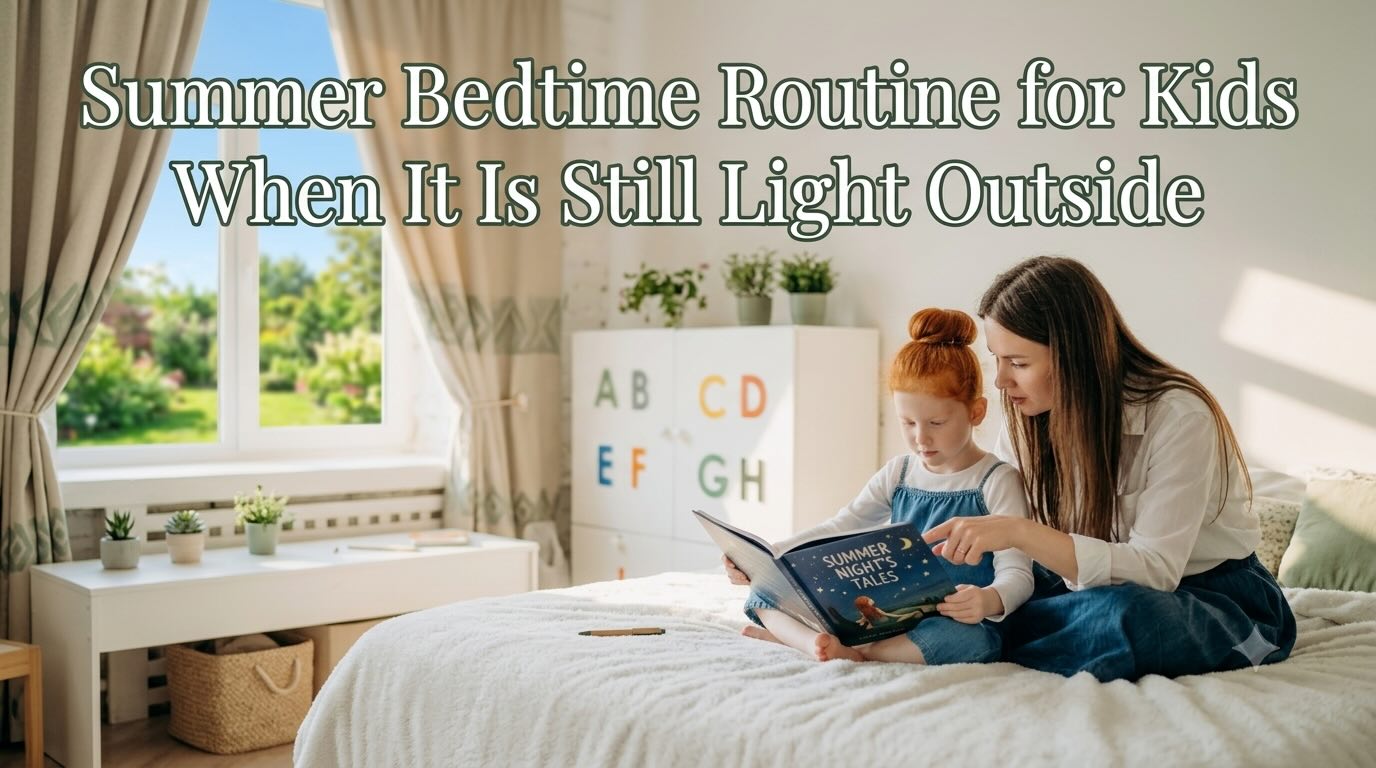
Late sunsets and changing summer activities weaken the environmental cues that usually signal bedtime. Children may look awake even while their ability to manage transitions is dropping.
The simplest way to build a low-stimulation summer bedtime rhythm
Begin the wind-down before overtired behavior appears. Use the same short order—wash, pajamas, teeth, book, bed—and avoid reopening choices after the final step.
- Start the wind-down before the child looks overtired.
- Use a no-screen buffer before bed.
- Make the same five steps visible: bath, pajamas, teeth, book, bed.
- Use blackout curtains or a consistent sleep cue if evenings are bright.
- Keep one final phrase and do not restart the whole routine.
What to make visible in a summer bedtime routine
Keep the sequence and wake time reasonably consistent, then use light, sound, and activity level to create an evening cue inside the home.
- A screen-off cue
- Wash or bath
- Pajamas and teeth
- One quiet connection activity
- Bedroom light and sound cues
- A consistent final phrase
Try it in one real situation
Work backward from the desired lights-out time and place the routine card where wind-down begins. Reduce bright light and stimulating play before the first step. If bedtime has drifted substantially, move it gradually rather than expecting one abrupt reset.
Common mistakes to avoid
Do not add a new negotiation after each completed step. Decide choices such as book or pajamas before the routine reaches the bedroom.
- Waiting until bedtime to reduce stimulation.
- Letting summer treats and screens run into the bedroom routine.
- Negotiating each step from scratch.
Printable next step
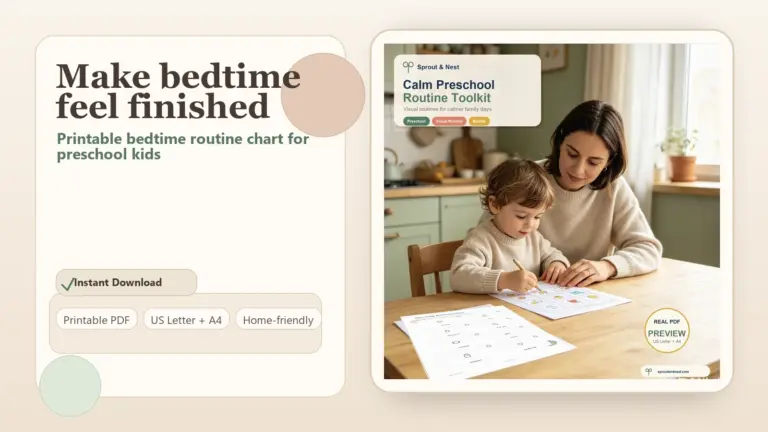
Choose one bedtime visual and keep the sequence stable:
You can also browse the related toolkit categories:
Frequently asked questions
Why is summer bedtime harder for kids?
Longer daylight, later activities, heat, screens, and looser routines can all make bedtime feel less predictable.
What helps kids sleep in summer?
A consistent wind-down, reduced evening screens, dim light, familiar steps, and a calm final goodbye can help.
References
Featured image source: open-license image previously uploaded from Wikimedia Commons.