Last updated: June 2026
Home summer camp sounds fun until you realize you are the counselor, snack manager, conflict mediator, activity director, and cleanup crew.
If you are searching for a summer camp at home schedule, you probably do not need a perfect summer schedule. You need a repeatable system that your child can understand and that you can actually keep using on tired days.
Quick answer: A summer camp at home schedule should repeat the same daily shape with small theme changes: morning movement, one project, lunch, quiet time, outdoor play, and a simple closing reset.
Why this summer problem feels so hard
Camp at home can become a second job when every hour needs a new activity. Children usually benefit more from a familiar daily shape and one memorable project than from constant entertainment.
The simplest way to build a home summer camp rhythm
Plan one supply-dependent activity per day and keep the rest drawn from books, outside play, music, and household materials. Leave a blank block for spontaneous play.
- Choose weekly themes such as water, nature, books, cooking, or kindness.
- Use the same time blocks each day so kids know what comes next.
- Plan one main activity, not a full Pinterest board.
- Keep a quiet block after lunch.
- End with cleanup and tomorrow preview.
Blocks for a realistic camp-at-home day
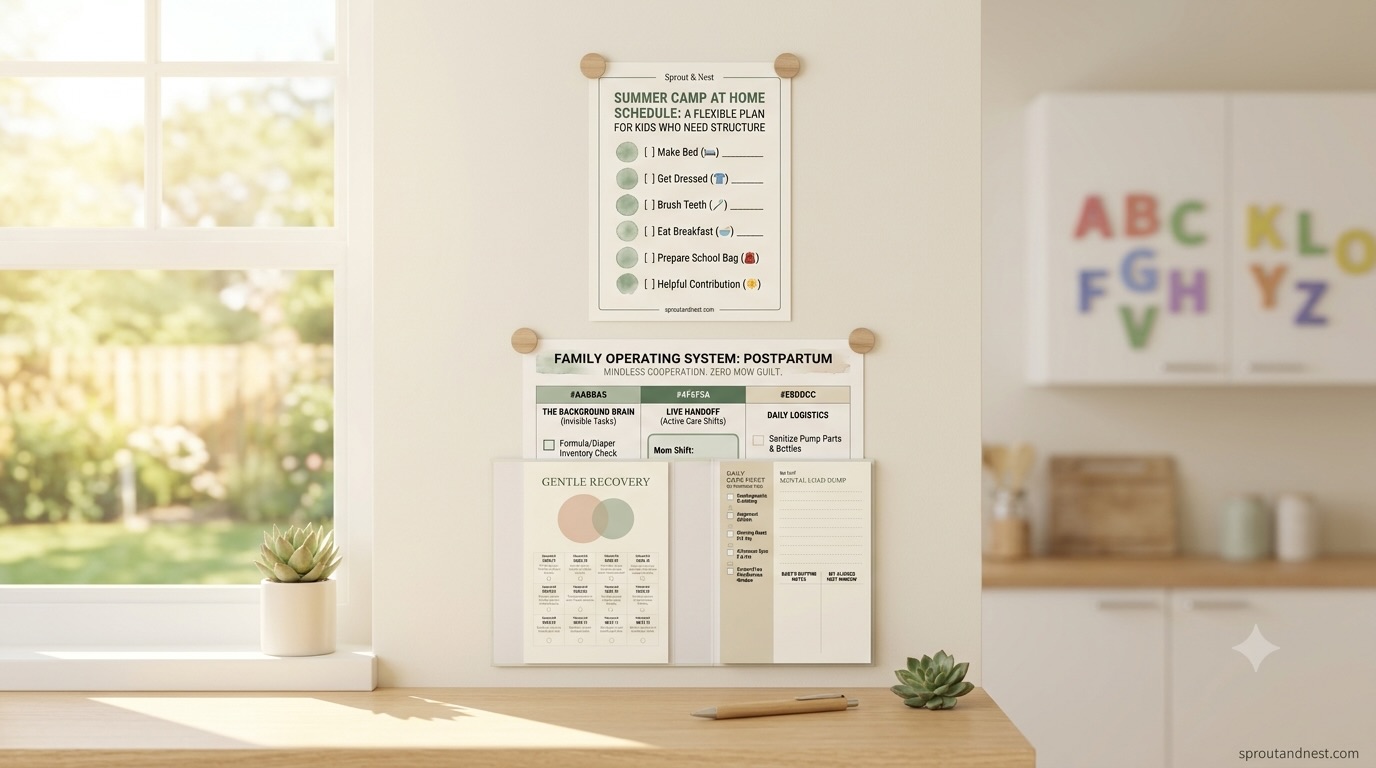
Repeat the same blocks—welcome, movement, main activity, lunch, quiet time, and cleanup—while changing only the weekly theme.
- A simple welcome activity
- Outdoor or indoor movement
- One themed project
- Lunch and cleanup
- A protected quiet block
- A preview of tomorrow
Try it in one real situation
Choose a theme from materials already in the house, then prepare one bin the night before. Run the same sequence for two or three days before deciding it needs more variety. If adults are depleted, keep the structure and replace the project with library books or outdoor observation.
Common mistakes to avoid
The schedule should lower preparation, not create a daily performance. Avoid projects that require several purchases or constant adult direction.
- Planning too many crafts with too many supplies.
- Skipping rest because the day feels exciting.
- Changing the structure every day.
Printable next step
Start with a weekly framework and add only the printables you will use:
You can also browse the related toolkit categories:
Frequently asked questions
How do you structure summer camp at home?
Repeat a simple daily rhythm and change only the theme or main activity.
Do kids need a new activity every day?
No. Repeating favorite activities helps children build confidence and reduces parent planning load.
References
Featured image source: open-license image previously uploaded from Wikimedia Commons.