Quick answer: A postpartum recovery planner should separate four kinds of information: the mother’s symptoms and questions, the baby’s care notes, the next caregiver handoff, and household help. Record only what has a clear use. Keep urgent warning signs and care-team numbers visible, and contact a qualified clinician rather than using a log to interpret a medical concern.
At 3 a.m., “When was the last feeding?” is a practical question. “Have I felt this dizzy all day?” is a health question. “Who is bringing dinner?” is a household question. Putting all three on one crowded tracker makes the page harder to use when everyone is tired.
A useful postpartum system gives each question a home and makes it clear who needs the information next.
Use four pages, not one master tracker
1. Maternal recovery notes
Use this page to prepare for contact with your obstetric care team. Record the date, the symptom in plain language, when it began, whether it changed, and the question you want to ask. Include medications only as directed on your discharge plan; do not use a printable to change a dose.
The American College of Obstetricians and Gynecologists provides a postpartum care checklist covering physical healing, bleeding, bladder and bowel concerns, feeding, sleep, support, mood, and future care. Use those domains as conversation prompts, not as a self-diagnosis score.
2. Baby care notes
A short feeding and diaper record may help with a caregiver handoff or a pediatric question. Ask the baby’s clinician what they actually want tracked, particularly after premature birth, feeding concerns, jaundice, weight concerns, or another individualized plan.
Do not let the log replace observation. If the baby seems unwell, is difficult to wake, has breathing trouble, or you have another urgent concern, contact the pediatric care team or emergency services as appropriate.
3. The next-shift handoff
This is the smallest and most useful page at night. It tells the next adult what happened recently and what is already prepared. It should take less than a minute to read.
4. Household support board
Keep meals, visitors, laundry, errands, sibling needs, and pet care away from the medical and newborn pages. Give helpers a visible task they can complete without asking the recovering parent to manage every detail.
A one-minute caregiver handoff
Use this structure at the end of a night or daytime support shift:
- Baby: last feed or care event, last diaper, and any instruction supplied by the pediatric team.
- Parent: water and food nearby, planned medication according to discharge directions, and any concern already reported.
- Next: the next expected task and where its supplies are.
- Escalate: which clinician or service to contact if a named concern occurs.
Example: “Baby fed at 2:10 and had a wet diaper. The next bottle supplies are on the counter. Maya ate toast and is resting; her prescribed medication schedule is on the discharge sheet. She has already called the nurse line about the headache.”
The handoff reports facts. It does not tell the next caregiver to decide whether a symptom is normal.
Track maternal recovery without monitoring everything
Choose the smallest record that helps you communicate. A daily check-in can include:
- one sentence about pain or physical recovery;
- bleeding or incision concerns you want to discuss;
- food, fluids, rest, and whether basic needs were reachable;
- mood or anxiety changes;
- a question for the next check-in or appointment;
- the name of the person who can help today.
ACOG describes postpartum care as an ongoing process that includes physical recovery, mood, infant feeding and care, sleep, chronic conditions, contraception, and social support—not a single later visit. Its postpartum care guidance supports continued contact tailored to the individual.
A tracker is useful when it helps you say, “This began Tuesday and is getting worse.” It becomes unhelpful when it creates pressure to produce perfect data before asking for care.
Keep urgent warning signs separate and visible
The CDC advises people to seek immediate medical care for urgent maternal warning signs during pregnancy and in the year after delivery. Examples include trouble breathing, chest pain, seizures, thoughts of harming yourself or the baby, heavy bleeding, fever, a severe or worsening headache, vision changes, severe belly pain, or significant one-sided limb swelling or pain.
That is not a complete list. If something feels seriously wrong, say that you are pregnant or were pregnant within the last year and seek medical help. Put the care team, nurse line, local emergency number, and a trusted support person on a card that can be found without opening the planner.
Design a newborn log for a real question
Before printing a month of pages, decide what the record will answer:
- Can two caregivers tell when the last care event happened?
- Did the pediatric clinician ask for a specific feeding or diaper record?
- Does the family need to note pumping, bottle preparation, or another instructed care step?
- Is the record making rest harder than the information is worth?
Use one line per event and a small notes column. Avoid adding sleep totals, mood scores, ounces, minutes, sides, and color codes unless someone is using that information. The newborn feeding and diaper log is an optional format; the baby’s clinician should guide what your family needs to monitor.
Move household management away from the recovering parent
“Tell me how I can help” still creates a planning job. Make a short support menu before visitors arrive:
- bring one ready-to-eat meal in a labeled container;
- wash bottles or feeding equipment according to the family’s instructions;
- fold one basket of laundry;
- walk the dog or handle school pickup;
- sit with the baby while the parent showers or rests nearby;
- leave at the agreed time without expecting to be hosted.
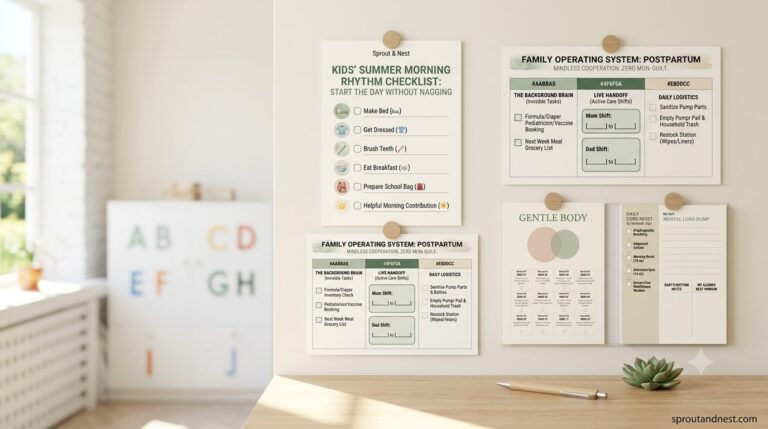
Assign an organizer other than the recovering parent when possible. The mental-load tracker can help a partner take ownership of recurring work rather than waiting for instructions.
Set visitor boundaries before the doorbell
Write a message that can be reused:
“We would love a short visit on Saturday from 2:00 to 2:30. Please check in before leaving home, wash your hands when you arrive, and reschedule if you are unwell. We may need to cancel if recovery or feeding requires rest.”
Follow medical guidance from your care teams about infection precautions and contact. A visitor plan should reduce coordination, not pressure the family to keep appointments when circumstances change.
What to stop tracking
Information nobody reviews. If a field has been blank or unused for three days, ask whether it belongs on the page.
Tasks without an owner. “Meals” is a worry; “Jordan orders dinner by 4 p.m.” is a handoff.
Health judgments. Write the symptom and contact the right professional. Do not create green, yellow, and red medical zones unless they came directly from the care team.
Every minute of sleep. Record what is needed for a clinical question or caregiver exchange; protect rest from unnecessary administration.
A printable option after the system is defined
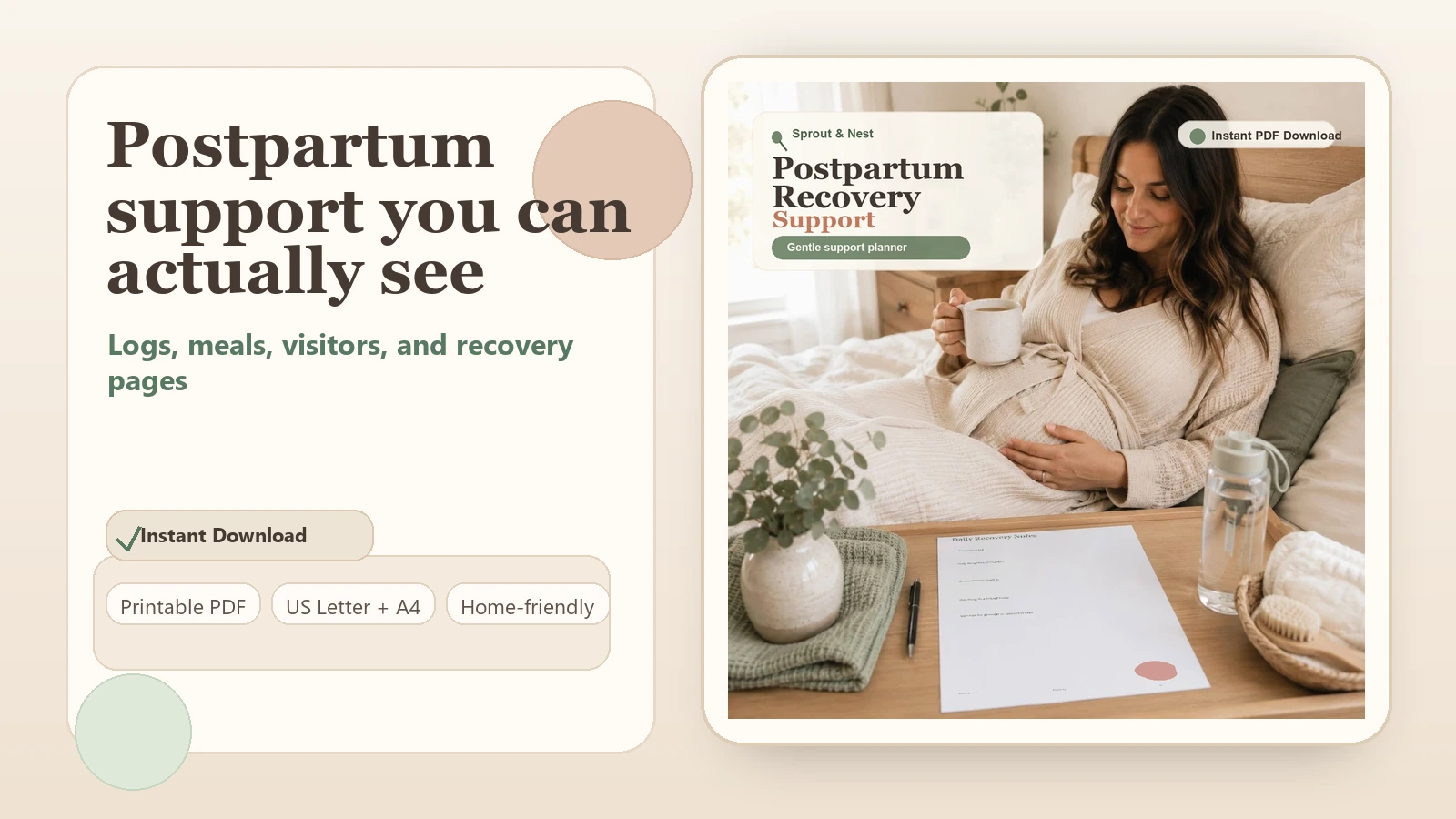
The Postpartum Recovery Support Planner can hold the four separate pages once the family decides who uses each one. For preparation before birth, the postpartum home-prep guide covers stations, supplies, safe sleep, contacts, and household ownership. Use a planner to support care, not to delay contacting a clinician.
Frequently asked questions
What should I track after giving birth?
Track only information needed for a care conversation, an instructed monitoring plan, or the next caregiver handoff. Maternal symptoms and questions should remain distinct from the baby’s feeding or diaper notes.
How long should we use a newborn log?
There is no universal duration. Ask the pediatric clinician what information matters, then stop or simplify the log when it no longer supports care or communication.
Can a postpartum planner tell me whether a symptom is normal?
No. It can help describe timing and changes, but a qualified health professional must evaluate a medical concern. Urgent warning signs require immediate care.
Who should manage visitors and meals?
When possible, give one support person authority to coordinate them. The recovering parent should be able to cancel a visit or change a plan without managing a long group conversation.