Quick answer: Bring three priority questions, a current medication and supplement list, and one page for the answers. Ask what will happen today, what decisions are coming next, which symptoms require a call, and how to reach the team after hours. Your questions should follow your health history and care plan rather than a generic trimester script.
The question that matters most often appears after the clinician leaves: “Was I supposed to schedule that test?” or “What did they mean by call if it gets worse?” A useful appointment page captures the question before the visit and the exact next action before you leave.
Prepare one page the day before
Divide the page into four boxes:
- Changes since the last visit: symptoms, medications, care elsewhere, or relevant life changes.
- Top three questions: the issues you do not want to lose if time is short.
- Today’s answers: plain-language notes or approved written instructions.
- Next actions: tests, referrals, prescriptions, scheduling, and who owns each task.
Bring identification, requested records, and a complete list of prescriptions, over-the-counter medicines, vitamins, and supplements. The American College of Obstetricians and Gynecologists’ prenatal care guidance notes that visits may be tailored to health needs and can include medical care, tests, counseling, and support resources.
Questions for the first prenatal visit
- Who is part of my care team, and whom might I see at later visits or birth?
- How is my due date being estimated?
- How will my medical, pregnancy, and family history affect care?
- Which medicines and supplements should I continue, change, or avoid?
- What is the plan for appointments, labs, imaging, or referrals?
- How do I reach the office during the day and after hours?
- Which symptoms should prompt a call, urgent assessment, or emergency help?
- What support is available for food, transport, language, mental health, safety, or finances?
Do not stop a prescribed medicine because a checklist raises the question. Bring it to the prescribing clinician and prenatal care team.
Questions about screening and tests
ACOG’s guide to routine tests during pregnancy explains that tests occur at different stages and that screening and diagnostic tests answer different questions. For any offered test, ask:
- What is this test looking for?
- Is it screening or diagnostic?
- When is it usually offered in my individualized plan?
- What are the possible results and limitations?
- What would happen after a positive, negative, or uncertain result?
- Are there costs, risks, preparation steps, or time limits?
- Who can help me understand the choice?
Record the decision and next action, not just the test name.
Questions for a routine follow-up visit
- Are today’s measurements or findings consistent with the plan you expect for me?
- Is there anything from my last lab, scan, or consultation we should review?
- What changes should I expect before the next visit?
- Are my work, exercise, food, sleep, travel, or daily-activity questions affected by my health history?
- When should the next appointment occur, and what will it include?
Ask the clinician to repeat or write down an answer you do not understand. “What should I do first?” and “Can you explain what that result changes?” are useful follow-ups.
Questions to ask before the third trimester
- Where should I go if labor or another urgent concern begins?
- How will the team discuss birth preferences and medical recommendations?
- Which facility policies or resources should I review?
- What feeding, lactation, anesthesia, social work, or mental-health support is available?
- How should I plan for postpartum follow-up and medication changes?
- What should my support person know about urgent maternal warning signs?
Put household preparation on the pregnancy checklist by week, not on the limited clinical question page.
Questions about postpartum care before birth
ACOG treats postpartum care as a continuing process. Before birth, ask:
- When and how will postpartum contact occur?
- Whom do I call about bleeding, pain, blood pressure, incision or tear concerns, feeding, mood, or medication?
- Which current health conditions need follow-up after delivery?
- What mental-health resources are available before a crisis?
- How will contraception, future pregnancy planning, work, or caregiving be discussed?
The postpartum home-prep guide turns those answers into contacts, support ownership, safe sleep, food, and household handoffs.
Urgent concerns do not wait for an appointment
The CDC lists urgent maternal warning signs during pregnancy and in the year after delivery. They include trouble breathing, chest pain, seizures, thoughts of self-harm or harming the baby, severe or worsening headache, vision changes, severe belly pain, fever, significant bleeding or fluid leakage, and a concerning change in fetal movement, among other symptoms.
Review the full official list and follow your care team’s instructions. If you have an urgent symptom or feel something is seriously wrong, seek medical care and state that you are pregnant or were pregnant within the last year. Do not save the question for the next routine visit.
Close the visit with five checks
- What is the next appointment date or scheduling step?
- What test, referral, or prescription comes next?
- Who will contact whom, and by when?
- Which symptom or result should change the plan?
- Where will written results or instructions appear?
Use the patient portal for the tasks your practice permits, but keep urgent contact instructions outside the portal so they are visible when needed.
Make room for privacy and support
You can ask to speak with the clinician alone, use an interpreter, include a support person, or request accessible communication. If someone else attends, decide whether they will take notes, ask one prepared question, or simply listen. The pregnant person remains the focus of the visit.
For concerns about safety, coercion, substance use, housing, food, transport, or mental health, ask privately what support and confidentiality rules apply in your location.
Optional printable question page
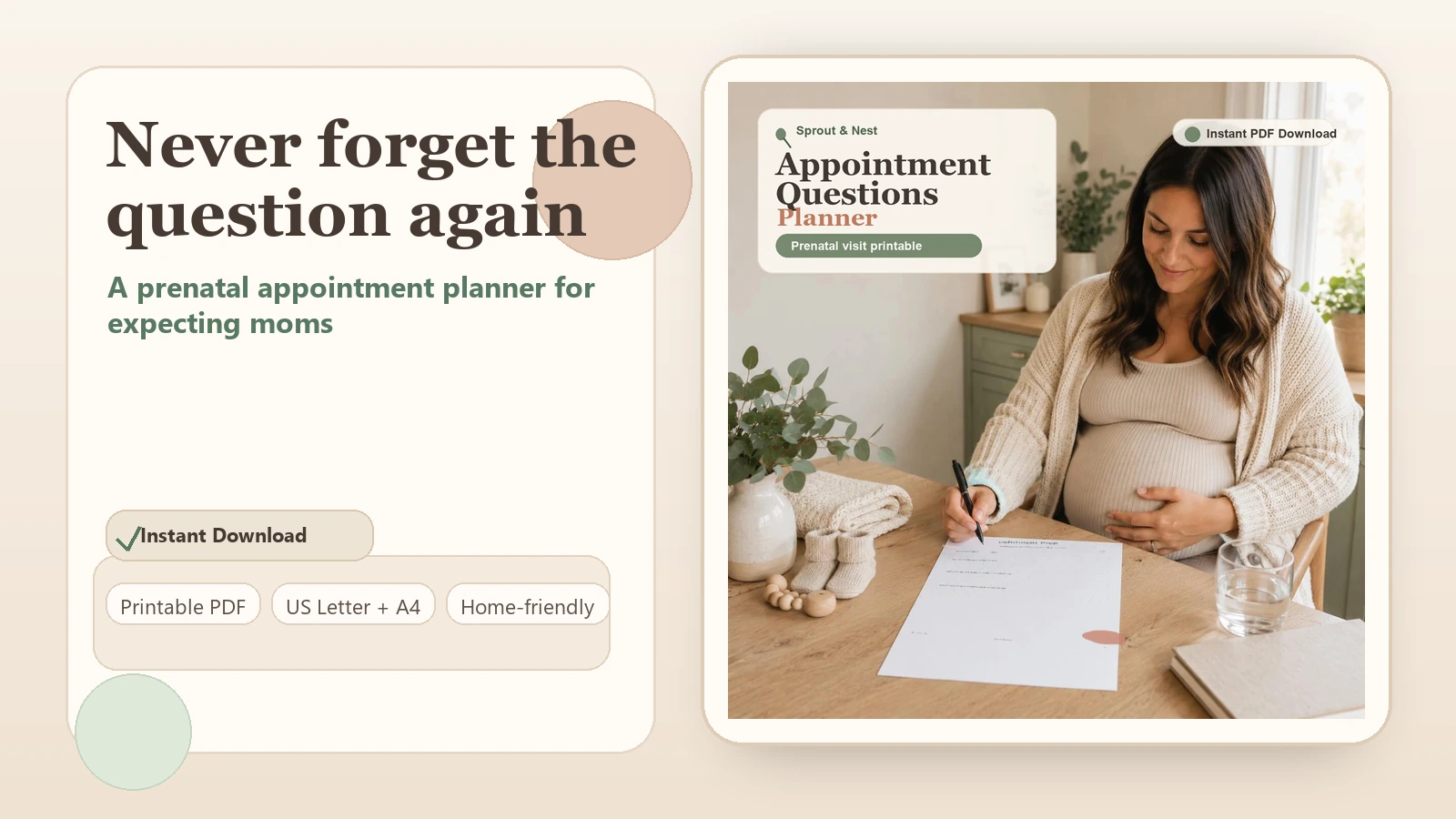
Test the four-box page on paper first. The Pregnancy Appointment Questions Planner can provide reusable sections for questions, answers, and follow-up. It should support the conversation, not generate medical advice or replace the clinician’s plan.
Frequently asked questions
How many questions should I bring?
Keep a running list, then mark the three priorities for that visit. Bring the full list in case time allows or the clinician wants to address related topics.
Can I record the appointment?
Policies and consent laws vary. Ask the clinician before recording. Written notes, a portal summary, or a support person may be alternatives.
What if I do not understand the answer?
Ask for plain language, an example, or written instructions. Repeat the plan back: “I will schedule the test this week and call this number if the symptom changes—is that correct?”
Should I ask postpartum questions before birth?
Yes. Clarify follow-up, warning signs, feeding support, medications, mental health, and who to contact. Circumstances may change, but knowing the route to help is useful.