Last updated: June 2026
Toddlers do not know what 'later' or 'after lunch' means. In summer, that uncertainty often shows up as clinging, whining, resistance, or sudden tears over a change that seems tiny to adults.
If you are searching for a visual summer schedule for toddlers, you probably do not need a perfect summer schedule. You need a repeatable system that your child can understand and that you can actually keep using on tired days.
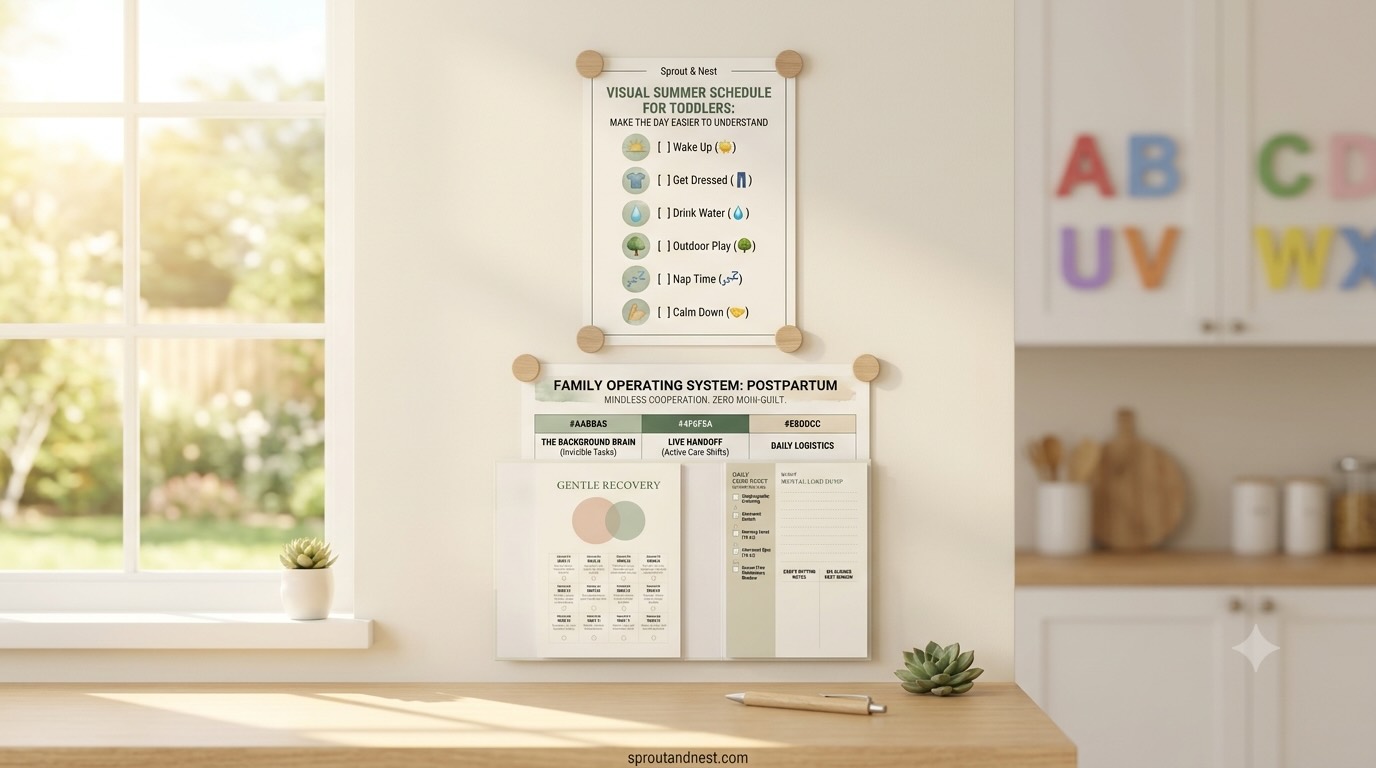
Quick answer: A visual summer schedule for toddlers should show the next few parts of the day, not the entire calendar. Use pictures for wake up, breakfast, outside play, lunch, nap or quiet time, dinner, bath, and bedtime.
Why this summer problem feels so hard
Toddlers do not yet understand a verbal plan for the whole day. Pictures make an invisible sequence concrete, especially before leaving the house, ending an activity, or moving toward sleep.
The simplest way to build a picture-based toddler summer rhythm
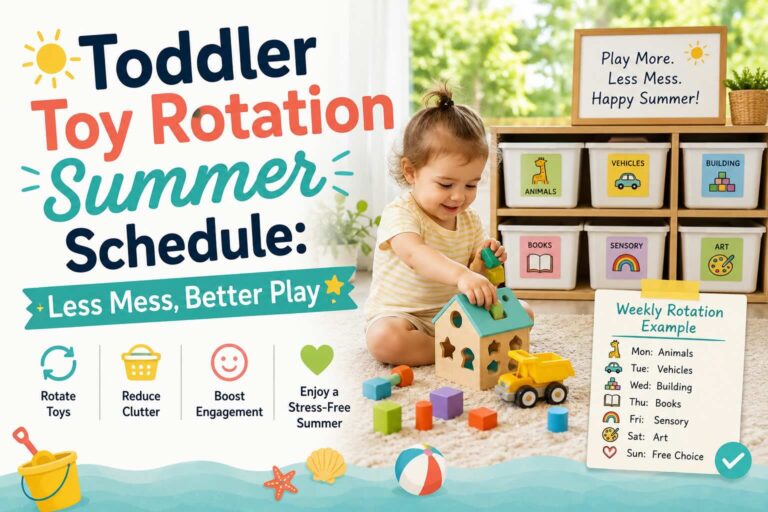
Use photos or simple icons your toddler recognizes. Keep meals, rest, outside time, and bedtime consistent; swap only the card for the day's outing or errand.
- Start with three blocks: morning, afternoon, and evening.
- Use the same picture cards every day before adding special outings.
- Point to the next picture before a transition begins.
- Use a first-then phrase for hard moments, such as first shoes, then splash pad.
- Keep one flexible card for surprises or errands.
Cards to include in a toddler summer schedule
Show only the current activity and what comes next. Too many cards can become visual noise, while a small now-next sequence gives the child something clear to anticipate.
- Wake-up and getting dressed
- Meals and snack
- Outside or active play
- The day's outing or home activity
- Rest or quiet time
- Bath and bedtime
Try it in one real situation
Start with three cards for one difficult transition, such as breakfast, shoes, and playground. Point to each card rather than adding a long explanation. Before the last activity ends, turn over or remove its card and show the next one. Add more of the day only after that short strip is familiar.
Common mistakes to avoid
The schedule is a preview tool, not a way to force compliance. Keep a neutral surprise card available when plans change and name the change calmly.
- Showing too many choices at once.
- Changing the routine without previewing it.
- Using a schedule as a punishment instead of a helper.
Printable next step
Use the smallest printable format your toddler can scan easily:
You can also browse the related toolkit categories:
Frequently asked questions
Do toddlers need a full-day visual schedule?
Most toddlers do better with a short now-next-later display. A full-day chart can be useful for parents, but too much detail can overwhelm a young child.
Can a visual schedule help summer tantrums?
It can reduce tantrums caused by uncertainty. It will not remove every big feeling, but it gives the child a concrete cue before change happens.
References
Featured image source: open-license image previously uploaded from Wikimedia Commons.