Quick answer: Use a pregnancy checklist to organize questions and household preparation, not to prescribe medical care by calendar week. Start prenatal care early, follow the individualized schedule from your clinician, and group non-medical tasks into six manageable windows: weeks 4–8, 9–13, 14–20, 21–28, 29–32, and 33 to birth.
A due-date app can generate a new list every seven days, but pregnancy does not become safer or more prepared because week 18 contains exactly four completed boxes. Some tasks depend on health history, location, insurance, work, culture, birth setting, and the care plan. Others—saving phone numbers or choosing who feeds the dog—can be done whenever energy allows.
This checklist keeps those two categories separate.
First, separate clinical care from household preparation
Clinical care includes appointments, tests, imaging, medications, vaccines, symptom evaluation, and decisions made with qualified health professionals. The American College of Obstetricians and Gynecologists describes prenatal care as an individualized plan that may vary with health needs, risk, access, and preferences.
Household preparation includes budgeting, work paperwork, transportation, registry choices, meal plans, support roles, a hospital or birth-center bag, and the home setup. A printable can organize these jobs without telling someone when a medical test “must” happen.
Keep a third list titled ask the care team. Move any uncertain health task there rather than turning internet guidance into an instruction.
Weeks 4–8: establish care and capture the facts
Do not wait for a perfect planner. Start one page with the information needed for the first contact:
- the first day of the last menstrual period, if known;
- current prescriptions, over-the-counter medicines, vitamins, and supplements;
- health conditions, allergies, operations, and relevant pregnancy history;
- insurance or payment questions;
- transportation, language, accessibility, or confidentiality needs;
- questions about symptoms, food, work, exercise, travel, or exposures.
ACOG recommends beginning prenatal care in the first trimester when possible and bringing a complete health and medication history to the first visit. Contact a health professional as soon as you think you may be pregnant to establish an appropriate plan.
Household task: choose one folder—paper or digital—for appointment details and results. Do not scatter the same information across three apps and a group chat.
Weeks 9–13: build the care calendar you were actually given
After the first visits, copy confirmed appointments and instructions into one calendar. Add travel time, childcare, interpreter arrangements, lab location, and who needs to attend. Do not fill future weeks with a generic schedule if your clinician has tailored it differently.
ACOG’s overview of routine tests during pregnancy explains that some tests happen early and others later, while individual needs can change the plan. Use the page to prepare questions about screening and testing choices rather than checking them off without discussion.
Household task: identify one backup person for transportation, work coverage, pets, or other children if an appointment changes unexpectedly.
Weeks 14–20: make decisions that affect lead time
This is a useful window for decisions that require comparison or paperwork, without assuming every person feels energetic in the second trimester.
- Review parental leave, disability, and workplace procedures.
- Estimate essential baby costs before building a registry.
- Compare infant car seats and check installation resources.
- List childcare questions if care will be needed later.
- Discuss who should receive updates and who will protect privacy.
Appointment note: bring a written list of questions instead of trying to remember them at the end. The pregnancy appointment questions guide organizes symptoms, testing, medications, birth, and postpartum topics without telling the clinician what the answer should be.
Weeks 21–28: connect birth preparation to the first week home
Start the household plan before buying more items. Decide:
- who can provide transport and backup transport;
- who will care for pets or other children;
- which support person can coordinate messages;
- how food, laundry, and errands will be owned;
- where the baby has a safe sleep space;
- where care instructions and emergency contacts will live.
This is planning, not a prediction of how birth or recovery will go. Leave room for a different birth setting, hospital stay, feeding plan, or mobility need.
Household task: test a weekly food and laundry system now. A system that already works is easier to hand to another person later.
Weeks 29–32: prepare the handoffs
Write down responsibilities in complete sentences:
- “Jamie owns dinner from choosing through cleanup.”
- “Rae is the contact for visitor scheduling.”
- “Morgan handles school pickup if labor starts on a weekday.”
- “The car seat appointment is booked for this date and location.”
Ask the care team when they want you to prepare a hospital or birth-setting bag and what your facility provides. Begin with documents, contact information, comfortable basics, and individualized medical items advised by the facility—then avoid packing for every online scenario.
Home task: use the postpartum home-prep checklist to examine safe sleep, recovery access, food, and household ownership.
Weeks 33 to birth: verify, do not expand
The final window is for checking essential plans, not inventing new projects.
- Confirm upcoming care appointments and how to reach the care team after hours.
- Follow the clinician’s instructions about when and where to seek assessment.
- Install or verify the infant car seat using trusted resources.
- Confirm transport, keys, fuel or charging, and the route.
- Restock ordinary food and household supplies.
- Send the visitor and communication plan to the people who need it.
- Place identification and relevant paperwork where the support person can find it.
Leave optional nursery décor, deep cleaning, and “perfect” freezer preparation off the urgent list. Energy and health take priority over finishing a visual theme.
Keep urgent symptoms out of the weekly checklist
Symptoms do not wait for the correct week. The CDC’s urgent maternal warning-sign guidance tells pregnant and postpartum people to seek immediate care for symptoms such as trouble breathing, chest pain, seizures, thoughts of self-harm or harming the baby, severe or worsening headache, vision changes, severe belly pain, fever, fluid leakage or significant bleeding, or a concerning change in fetal movement.
The official list contains additional details and is not a substitute for individualized instructions. If something feels seriously wrong, contact a health professional or emergency service and state that you are pregnant. Do not wait to reach that week’s planner review.
A weekly page that stays useful
Use five fields:
- Confirmed care: appointments and instructions already provided.
- Questions: what you want to ask the care team.
- One household task: a concrete preparation action.
- Owner: the person responsible for completing it.
- Waiting: decisions that depend on medical advice or another person.
This prevents an unanswered health question from looking like an overdue personal task.
What to remove from a pregnancy planner
Universal appointment promises. Use the schedule from your own care team.
Automatic test decisions. Record the discussion and informed choice rather than presenting all screening as identical for every person.
Shopping disguised as preparation. A support contact and transport plan may matter more than another registry category.
Tasks owned by the pregnant person alone. Give partners and supporters complete responsibilities before the final weeks.
Date changes that imply medical urgency. A missed home-organizing task can move; a medical question should go to the clinician.
Optional printable format
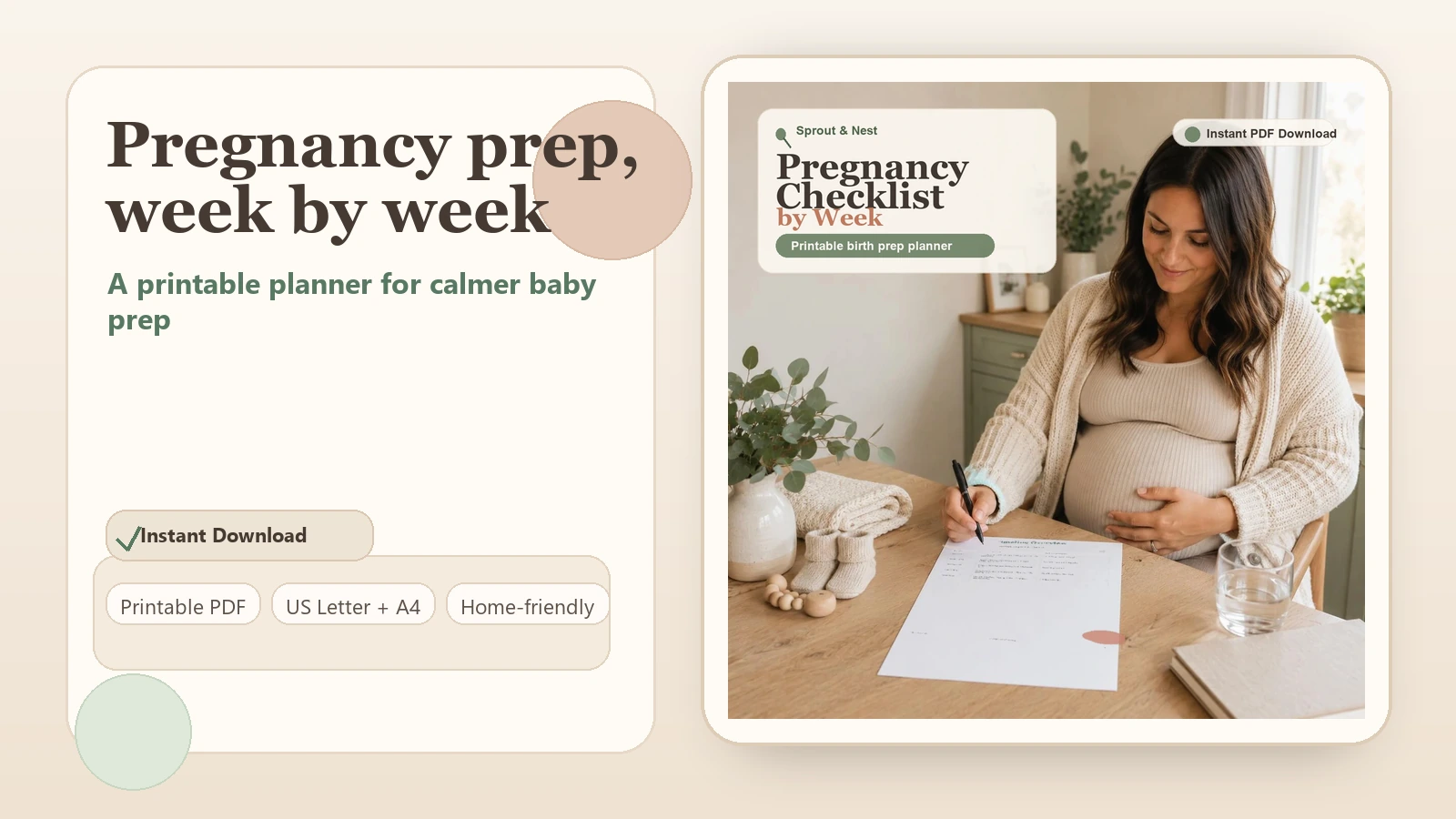
The Pregnancy Checklist by Week Printable Planner can organize confirmed care, questions, and household work. Adapt its calendar to the plan provided by your clinician. For the period after birth, the postpartum recovery planner guide separates maternal notes, baby records, caregiver handoffs, and household help.
Frequently asked questions
Does every pregnancy follow the same appointment schedule?
No. Prenatal care can be tailored to health needs, risk, location, access, and preferences. Use the schedule confirmed by your own licensed care team.
When should I pack a hospital bag?
Ask the planned facility and care team what they recommend and provide. Prepare essential documents, contacts, and basics with enough lead time for your circumstances rather than relying on one universal week.
What if I am already late starting the checklist?
Begin with care contact, urgent questions, transport, support ownership, and safe sleep preparation. Skip decorative or optional tasks instead of trying to complete every past week.
Can a weekly checklist tell me which symptoms are normal?
No. Bring symptoms and concerns to a qualified health professional. Seek immediate care for urgent warning signs or when something feels seriously wrong.